

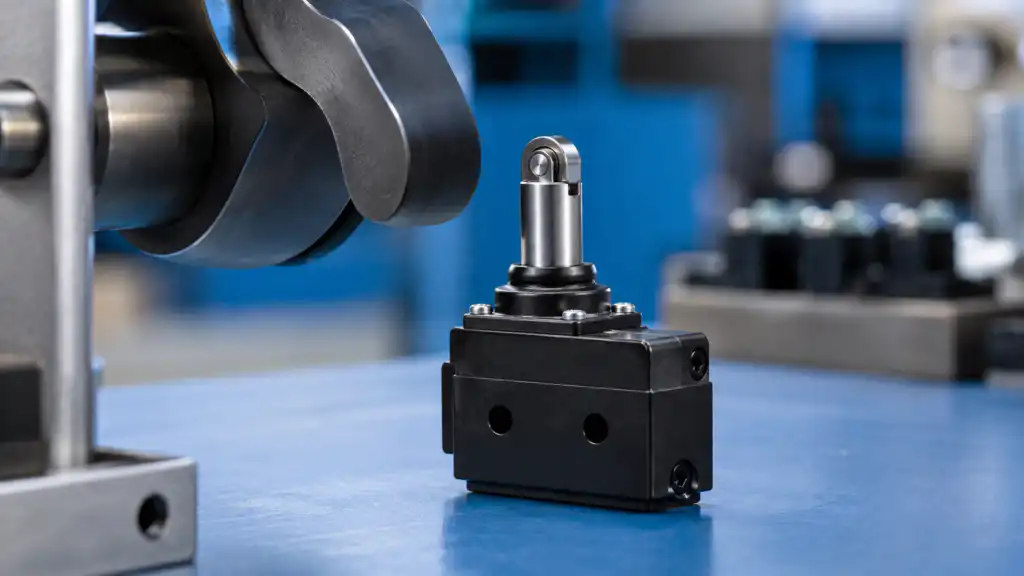
A roller plunger limit switch combines direct plunger motion with a small rolling element at the contact point. It is useful when a cam approaches generally along the plunger axis but also moves laterally across the switch. The roller can reduce sliding friction and surface wear compared with a plain plunger. It does not correct poor alignment, excessive impact, insufficient overtravel, or an unsuitable enclosure. Selection should start with the cam path, approach speed, operating force, allowed travel, repeatability, and environment, followed by an assembled-machine validation.
Regola di selezione: considerare il dispositivo, l'attuatore, i contatti, la custodia, il cablaggio, la logica di controllo, l'utente e il movimento della macchina come un unico sistema. Gli esempi di prodotto illustrano solo la forma; l'idoneità finale deve derivare dalla documentazione aggiornata per il codice d'ordine esatto e dalla convalida nell'apparecchiatura finita.
Come funziona il meccanismo
As the cam contacts the roller, the plunger moves toward the switch body. The internal mechanism changes state at the operating point and returns after the cam retreats past the release point. The difference creates useful hysteresis. The roller bearing, plunger guide, seals, return spring, and internal contacts all contribute to behavior. A cam that drives too deeply or hits from the side can damage the mechanism even when the electrical circuit is correct.

Criteri di selezione a colpo d'occhio
| Area decisionale | Cosa verificare | Motivo ingegneristico |
|---|---|---|
| Cam profile | Use a smooth lead-in and lead-out compatible with the switch drawing | Sharp edges create impact and unstable motion. |
| Approach direction | Keep the resulting force close to the permitted plunger axis | Side force can bind the guide or accelerate wear. |
| Operating travel | Cross the operating point under every tolerance condition | Too little stroke causes missed signals. |
| Overtravel | Provide margin without reaching the mechanical limit | Controlled overtravel absorbs variation without using the switch as a stop. |
| Speed | Compare minimum and maximum cam speed with the device limits | Very slow or fast motion can change switching behavior and impact. |
| Roller material | Match the roller and cam surfaces to wear and contamination conditions | A roller is still a mechanical contact interface. |
| Mounting rigidity | Prevent bracket movement and fastener loosening | Small mounting shifts change the operating point. |
| Ambiente | Check ingress, temperature, oil, chips, vibration, and cable sealing | Protection must apply to the complete installed assembly. |
Questa tabella è volutamente qualitativa. Limiti numerici, valori nominali, coppia, forza, corsa, dichiarazioni ambientali e valori di durata devono essere presi dalla scheda tecnica corrente e valutati in base alle condizioni dell'applicazione.
Processo di selezione dettagliato
Cam profile
Cosa verificare: Use a smooth lead-in and lead-out compatible with the switch drawing. Sharp edges create impact and unstable motion. The requirement should be written in the project specification and traced to the exact model drawing or datasheet. Review worst-case tolerance, wear, contamination, maintenance access, and foreseeable misuse. If the available documentation does not define the boundary, keep the point open for supplier confirmation and sample testing rather than substituting an assumption.
Approach direction
Cosa verificare: Keep the resulting force close to the permitted plunger axis. Side force can bind the guide or accelerate wear. The requirement should be written in the project specification and traced to the exact model drawing or datasheet. Review worst-case tolerance, wear, contamination, maintenance access, and foreseeable misuse. If the available documentation does not define the boundary, keep the point open for supplier confirmation and sample testing rather than substituting an assumption.
Operating travel
Cosa verificare: Cross the operating point under every tolerance condition. Too little stroke causes missed signals. The requirement should be written in the project specification and traced to the exact model drawing or datasheet. Review worst-case tolerance, wear, contamination, maintenance access, and foreseeable misuse. If the available documentation does not define the boundary, keep the point open for supplier confirmation and sample testing rather than substituting an assumption.
Overtravel
Cosa verificare: Provide margin without reaching the mechanical limit. Controlled overtravel absorbs variation without using the switch as a stop. The requirement should be written in the project specification and traced to the exact model drawing or datasheet. Review worst-case tolerance, wear, contamination, maintenance access, and foreseeable misuse. If the available documentation does not define the boundary, keep the point open for supplier confirmation and sample testing rather than substituting an assumption.
Speed
Cosa verificare: Compare minimum and maximum cam speed with the device limits. Very slow or fast motion can change switching behavior and impact. The requirement should be written in the project specification and traced to the exact model drawing or datasheet. Review worst-case tolerance, wear, contamination, maintenance access, and foreseeable misuse. If the available documentation does not define the boundary, keep the point open for supplier confirmation and sample testing rather than substituting an assumption.
Roller material
Cosa verificare: Match the roller and cam surfaces to wear and contamination conditions. A roller is still a mechanical contact interface. The requirement should be written in the project specification and traced to the exact model drawing or datasheet. Review worst-case tolerance, wear, contamination, maintenance access, and foreseeable misuse. If the available documentation does not define the boundary, keep the point open for supplier confirmation and sample testing rather than substituting an assumption.
Mounting rigidity
Cosa verificare: Prevent bracket movement and fastener loosening. Small mounting shifts change the operating point. The requirement should be written in the project specification and traced to the exact model drawing or datasheet. Review worst-case tolerance, wear, contamination, maintenance access, and foreseeable misuse. If the available documentation does not define the boundary, keep the point open for supplier confirmation and sample testing rather than substituting an assumption.
Ambiente
Cosa verificare: Check ingress, temperature, oil, chips, vibration, and cable sealing. Protection must apply to the complete installed assembly. The requirement should be written in the project specification and traced to the exact model drawing or datasheet. Review worst-case tolerance, wear, contamination, maintenance access, and foreseeable misuse. If the available documentation does not define the boundary, keep the point open for supplier confirmation and sample testing rather than substituting an assumption.

Revisione della domanda
- Conveyor position confirmation. Record the expected command, response, release behavior, abnormal condition, and acceptance evidence for the assembled machine.
- Indexing table home detection. Record the expected command, response, release behavior, abnormal condition, and acceptance evidence for the assembled machine.
- Door or cover position feedback in a protected mechanism. Record the expected command, response, release behavior, abnormal condition, and acceptance evidence for the assembled machine.
- Cam-driven sequence control. Record the expected command, response, release behavior, abnormal condition, and acceptance evidence for the assembled machine.
- End-position feedback where lateral cam travel is unavoidable. Record the expected command, response, release behavior, abnormal condition, and acceptance evidence for the assembled machine.
Per ogni applicazione, includere l'avvio, il normale funzionamento, lo spegnimento, la perdita di alimentazione, il ripristino dell'alimentazione, la modalità di manutenzione, la sostituzione dei componenti e i guasti identificati dalla valutazione dei rischi. Un interruttore di controllo generale non deve essere trattato come una funzione di sicurezza completa.
Lista di controllo per la messa in servizio
- Bloccare il requisito. Indica l'azione prevista, la condizione normale, l'alimentazione, il carico, il movimento, l'ambiente e l'utente.
- Abbina il codice dell'ordine. Confrontare la parte consegnata con il disegno approvato, il diagramma dei contatti, l'attuatore, il tipo di terminale e gli accessori.
- Ispezionare l'installazione. Controllare l'allineamento, gli elementi di fissaggio, lo spazio libero posteriore, il passaggio dei cavi, lo scarico della trazione, la protezione delle parti in tensione e l'accesso per la manutenzione.
- Testa ogni stato. Verificare il funzionamento e il rilascio ai limiti di tolleranza, alle velocità previste, ai carichi, con guanti, in presenza di contaminazione e nelle condizioni ambientali previste.
- Testare condizioni anormali. Includere conduttori scollegati, meccanismi bloccati o danneggiati, interruzione di corrente, contaminazione e altri guasti plausibili.
- Registra il risultato. Salvare modello, revisione, metodo di prova, osservazioni, criteri di accettazione, data e approvatore.
Common mistakes
- Driving the roller past its allowed stroke. Prevent this by assigning the check to a drawing, datasheet, wiring record, or commissioning test with a named acceptance criterion.
- Placing the cam corner directly against the roller. Prevent this by assigning the check to a drawing, datasheet, wiring record, or commissioning test with a named acceptance criterion.
- Treating the switch as a safety function without a validated architecture. Prevent this by assigning the check to a drawing, datasheet, wiring record, or commissioning test with a named acceptance criterion.
- Selecting from contact current alone. Prevent this by assigning the check to a drawing, datasheet, wiring record, or commissioning test with a named acceptance criterion.
- Testing only at nominal alignment. Prevent this by assigning the check to a drawing, datasheet, wiring record, or commissioning test with a named acceptance criterion.
What to include in an RFQ
Provide the application, target market, applicable standards, machine function, supply and load, control interface, contact logic, mechanical drawing, motion path, panel dimensions, cable method, environment, operating frequency, quantity, documentation needs, and sample-validation plan. Ask the supplier to identify assumptions and exceptions. ONPOW offers relevant products in its application-specific product family and the broader industrial control product range.
Related ONPOW guides
Authoritative references
- IEC 60947-5-1 control-circuit devices
- IEC 60529 degrees of protection provided by enclosures
- OSHA machine guarding requirements
- OSHA electrical safety requirements
Video educativo
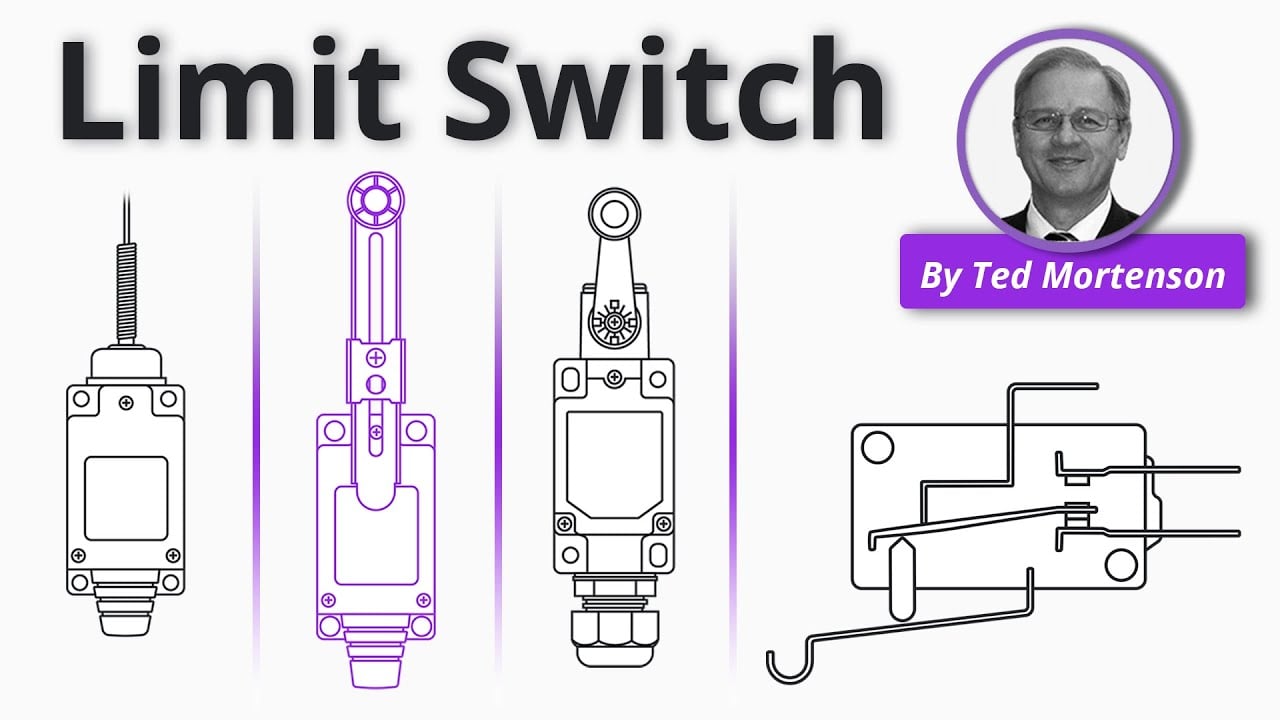
Limit Switch Explained by RealPars provides general background. Project decisions still require the applicable standards and product documentation.
Domande frequenti
Why use a roller instead of a plain plunger?
A roller can reduce sliding friction when a moving cam passes across the actuator.
Can the cam approach from any direction?
No. Use the direction and angle permitted by the exact manufacturer drawing.
How much overtravel is needed?
Enough to maintain operation across tolerances without exceeding the documented limit; use the exact model data.
Does a roller plunger improve electrical rating?
No. Actuator style does not replace checking voltage, current, load category, and inrush.
Final decision
Approve the component only when the documented mechanical, electrical, environmental, usability, installation, and maintenance boundaries all fit the assembled system. Resolve unknowns through current manufacturer information and testing before production release.
Personalizzazione
ONPOW undertakes a variety of custom needs for push-button development. Confirm whether packaging, marking or documentation OEM/ODM applies to Roller Plunger Limit Switch Selection for Industrial Machines in the quotation.
La quantità minima d’ordine, i tempi di consegna e le condizioni commerciali non sono pubblicati qui; per confermare le informazioni contattate la nostra assistenza clienti. sales@onpow.com.



