

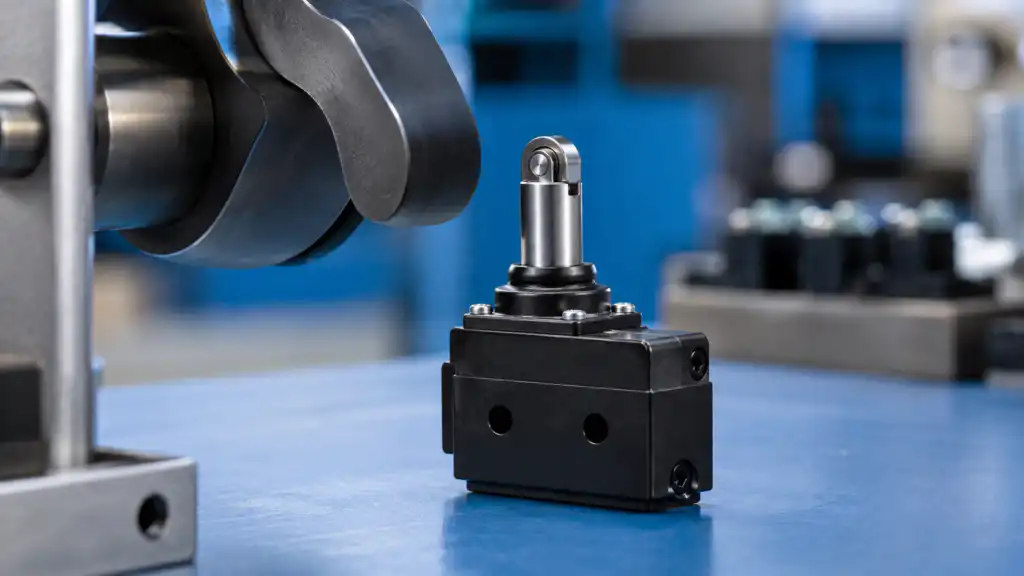
Un fin de course à poussoir à galet associe un mouvement direct du poussoir à un petit élément roulant au point de contact. Il est utile lorsqu'une came s'approche généralement le bon de l'axe du poussoir mais se déplace également latéralement par rapport au commutateur. Le galet permet de réduire le frottement de glissement et l'usure de la surface par rapport à un poussoir simple. Il ne corrige ni un mauvais alignement, ni un impact excessif, ni une course de dépassement insuffisante, ni un boîtier inadapté. Le choix doit commencer par la trajectoire de la came, la vitesse d'approche, la force de fonctionnement, la course autorisée, la répétabilité et l'environnement, suivis d'une validation sur la machine assemblée.
Règle de sélection : traitez l'appareil, l'actionneur, les contacts, le boîtier, le câblage, la logique de commande, l'utilisateur et le mouvement de la machine comme un seul système. Les exemples de produits n'illustrent que la forme ; l'aptitude finale doit provenir de la documentation actuelle pour le code de commande exact et de la validation dans l'équipement fini.
Comment fonctionne le mécanisme
Au fur et à mesure que la came entre en contact avec le galet, le poussoir se déplace vers le corps du commutateur. Le mécanisme interne change d'état au point de déclenchement et revient après le retrait de la came au-delà du point de relâchement. La différence crée une hystérésis utile. Le roulement à galets, le guide-poussoir, les joints, le ressort de rappel et les contacts internes contribuent tous au comportement. Une came qui s'enfonce trop profondément ou qui tape de côté peut endommager le mécanisme même lorsque le circuit électrique est correct.

Critères de sélection en un coup d'œil
| Zone de décision | Que vérifier | Raison technique |
|---|---|---|
| Profil de cames | Utilisez une transition fluide et naturelle, compatible avec le dessin de l'interrupteur | Les arêtes vives créent de l'impact et un mouvement instable. |
| Sens d'approche | Maintenez la force résultante proche de l'axe autorisé du plongeur | La force latérale peut bloquer le guide ou accélérer l'usure. |
| Agence de voyage | Franchir le point de fonctionnement dans toutes les conditions de tolérance | Une course trop courte provoque des signaux manqués. |
| Surfréquentation | Prévoir une marge sans atteindre la limite mécanique | Une course de dépassement contrôlée absorbe la variation sans utiliser le commutateur comme butée. |
| Vitesse | Comparer les vitesses minimale et maximale de la came avec les limites de l'appareil | Un mouvement très lent ou très rapide peut modifier le comportement de commutation et l'impact. |
| Matériau du rouleau | Associer les surfaces du galet et de la came aux conditions d'usure et de contamination | Un rouleau reste une interface de contact mécanique. |
| Rigidité de montage | Empêcher le déplacement des supports et le desserrage des fixations | De petits décalages de montage modifient le point de fonctionnement. |
| Environnement | Vérifier l'étanchéité, la température, l'huile, les copeaux, les vibrations et l'étanchéité des câbles | La protection doit s'appliquer à l'ensemble monté complet. |
Ce tableau est intentionnellement qualitatif. Les limites numériques, les valeurs nominales, le couple, la force, la course, les déclarations environnementales et les valeurs d'endurance doivent être tirés de la fiche technique actuelle et évalués dans les conditions de l'application.
Processus de sélection détaillé
Profil de cames
À vérifier : Utilisez une entrée et une sortie progressives compatibles avec le dessin du commutateur. Les arêtes vives créent de l'impact et un mouvement instable. L'exigence doit être rédigée dans le cahier des charges du projet et tracée jusqu'au dessin de modèle exact ou à la fiche technique. Examinez la tolérance au pire cas, l'usure, la contamination, l'accès à la maintenance et la mauvaise utilisation prévisible. Si la documentation disponible ne définit pas la limite, laissez le point ouvert pour la confirmation du fournisseur et les tests d'échantillons plutôt que de substituer une hypothèse.
Sens d'approche
À vérifier : Maintenez la force résultante proche de l'axe autorisé du plongeur. Une force latérale peut gripper le guide ou accélérer l'usure. Cette exigence doit être inscrite dans le cahier des charges du projet et rattachée au dessin de modélisation exact ou à la fiche technique. Analysez la tolérance dans le pire des cas, l'usure, la contamination, l'accès pour la maintenance et la mauvaise utilisation prévisible. Si la documentation disponible ne définit pas la limite, laissez le point ouvert pour confirmation par le fournisseur et tests d'échantillons plutôt que de substituer une hypothèse.
Agence de voyage
À vérifier : Franchir le point de fonctionnement dans toutes les conditions de tolérance. Une course trop faible entraîne des signaux manqués. L'exigence doit être rédigée dans le cahier des charges du projet et liée au dessin de modèle exact ou à la fiche technique. Examiner la tolérance au pire cas, l'usure, la contamination, l'accès à la maintenance et la mauvaise utilisation prévisible. Si la documentation disponible ne définit pas la limite, laisser le point ouvert pour confirmation par le fournisseur et test d'échantillons plutôt que de substituer une hypothèse.
Surfréquentation
À vérifier : Prévoir une marge sans atteindre la limite mécanique. Une surcourse contrôlée absorbe les variations sans utiliser le interrupteur comme butée. L'exigence doit être rédigée dans le cahier des charges du projet et rattachée au dessin de modèle exact ou à la fiche technique. Examiner la tolérance au pire cas, l'usure, la contamination, l'accès à la maintenance et l'utilisation abusive prévisible. Si la documentation disponible ne définit pas la limite, laisser le point ouvert pour confirmation par le fournisseur et tests d'échantillons plutôt que de substituer une supposition.
Vitesse
À vérifier : Comparez les vitesses minimale et maximale de la came avec les limites de l'appareil. Un mouvement très lent ou très rapide peut modifier le comportement de commutation et l'impact. L'exigence doit être écrite dans le cahier des charges du projet et rattachée au dessin de modèle exact ou à la fiche technique. Examinez la tolérance au pire cas, l'usure, la contamination, l'accès à la maintenance et la mauvaise utilisation prévisible. Si la documentation disponible ne définit pas la limite, laissez le point ouvert pour confirmation par le fournisseur et essais sur échantillons plutôt que de substituer une supposition.
Matériau du rouleau
À vérifier : Associez les surfaces du galet et de la came aux conditions d'usure et de contamination. Un galet reste une interface de contact mécanique. L'exigence doit être rédigée dans le cahier des charges du projet et rattachée au dessin de modèle exact ou à la fiche technique. Examinez la tolérance au pire cas, l'usure, la contamination, l'accès à la maintenance et la mauvaise utilisation prévisible. Si la documentation disponible ne définit pas la limite, laissez le point ouvert pour confirmation par le fournisseur et essais sur échantillons plutôt que de substituer une hypothèse.
Rigidité de montage
À vérifier : Empêcher le déplacement des supports et le desserrage des fixations. De petits décalages de montage modifient le point de fonctionnement. Cette exigence doit être rédigée dans le cahier des charges du projet et rattachée au dessin de modèle ou à la fiche technique exacts. Examiner la tolérance au pire cas, l'usure, la contamination, l'accès à la maintenance et la mauvaise utilisation prévisible. Si la documentation disponible ne définit pas la limite, laisser le point ouvert pour confirmation par le fournisseur et tests sur échantillons plutôt que de substituer une hypothèse.
Environnement
À vérifier : Vérifier l'étanchéité, la température, l'huile, les copeaux, les vibrations et l'étanchéité des câbles. La protection doit s'appliquer à l'ensemble monté complet. L'exigence doit être rédigée dans le cahier des charges du projet et tracée jusqu'au dessin de modèle ou à la fiche technique exacts. Examiner la tolérance au pire cas, l'usure, la contamination, l'accès pour la maintenance et l'utilisation détournée prévisible. Si la documentation disponible ne définit pas la limite, laisser le point ouvert pour confirmation par le fournisseur et essais sur échantillons plutôt que de substituer une supposition.

Examen de la demande
- Confirmation de la position du convoyeur. Enregistrer la commande attendue, la réponse, le comportement de libération, la condition anormale et la preuve de réception pour la machine assemblée.
- Détection de la position d'origine de la table d'indexage. Enregistrer la commande attendue, la réponse, le comportement de libération, la condition anormale et les preuves de recette pour la machine assemblée.
- Retour d'information sur la position de la porte ou du capot dans un mécanisme protégé. Enregistrer la commande attendue, la réponse, le comportement de déclenchement, la condition anormale et les preuves d'acceptation pour la machine assemblée.
- Commande de séquence commandée par came. Enregistrer la commande attendue, la réponse, le comportement de libération, la condition anormale et les preuves de recette pour la machine assemblée.
- Rétroaction de fin de course lorsque le déplacement latéral de la came est inévitable. Enregistrer la commande attendue, la réponse, le comportement de déclenchement, la condition anormale et les preuves d'acceptation pour la machine assemblée.
Pour chaque application, inclure le démarrage, le fonctionnement normal, l'arrêt, la perte de courant, le rétablissement du courant, le mode de maintenance, le remplacement de composants et les défauts identifiés par l'évaluation des risques. Un interrupteur de commande général ne doit pas être considéré comme une fonction de sécurité complète.
Liste de contrôle de mise en service
- Geler le besoin. Indiquer l'action prévue, la condition normale, l'alimentation, la charge, le mouvement, l'environnement et l'utilisateur.
- Faites correspondre le code de commande. Comparez la pièce livrée avec le dessin approuvé, le schéma de contacts, l'actionneur, le style de borne et les accessoires.
- Inspecter l'installation. Vérifier l'alignement, les éléments de fixation, le dégagement arrière, le cheminement des câbles, le soulagement de traction, la protection des pièces sous tension et l'accès pour l'entretien.
- Tester chaque état. Vérifier le fonctionnement et le déclenchement aux extrêmes de tolérance, aux vitesses prévues, aux charges, avec des gants, en présence de contamination et dans diverses conditions environnementales.
- Tester les conditions anormales. Inclure les conducteurs débranchés, les mécanismes bloqués ou endommagés, la perte d'alimentation, la contamination et autres défauts crédibles.
- Enregistrez le résultat. Enregistrer le modèle, la révision, la méthode d'essai, les observations, les critères d'acceptation, la date et l'approbateur.
Erreurs courantes
- Déplacement du galet au-delà de sa course autorisée. Prévenez cela en affectant la vérification à un dessin, une fiche technique, un schéma de câblage ou un essai de mise en service avec un critère d'acceptation nommé.
- Placement du coin de la came directement contre le galet. Prévenez cela en affectant la vérification à un dessin, une fiche technique, un schéma de câblage ou un essai de mise en service avec un critère d'acceptation nommé.
- Considérer le commutateur comme une fonction de sécurité sans architecture validée. Prévenez cela en affectant la vérification à un dessin, une fiche technique, un schéma de câblage ou un essai de mise en service avec un critère d'acceptation nommé.
- Sélection à partir du courant de contact seul. Prévenez cela en affectant la vérification à un dessin, une fiche technique, un schéma de câblage ou un essai de mise en service avec un critère d'acceptation nommé.
- Test uniquement à l'alignement nominal. Prévenez cela en affectant la vérification à un dessin, une fiche technique, un schéma de câblage ou un essai de mise en service avec un critère d'acceptation nommé.
Que faut-il inclure dans une demande de prix
Fournissez l'application, le marché cible, les normes applicables, la fonction de la machine, l'alimentation et la charge, l'interface de commande, la logique de contact, le dessin mécanique, la trajectoire de mouvement, les dimensions du panneau, la méthode de câblage, l'environnement, la fréquence de fonctionnement, la quantité, les besoins en documentation et le plan de validation des échantillons. Demandez au fournisseur d'identifier les hypothèses et les exceptions. ONPOW propose des produits pertinents dans sa famille de produits spécifique à une application et le plus large gamme de produits de contrôle industriel.
Guides ONPOW associés
- Comment fonctionne un micro-interrupteur
- Micro-interrupteur vs fin de course
- Vie mécanique contre vie électrique
Références autorisées
- appareils de circuit de commande CEI 60947-5-1
- CEI 60529 degrés de protection procurés par les enveloppes
- Exigences d'OSHA concernant la protection des machines
- Exigences de sécurité électrique de l'OSHA
Vidéo éducative
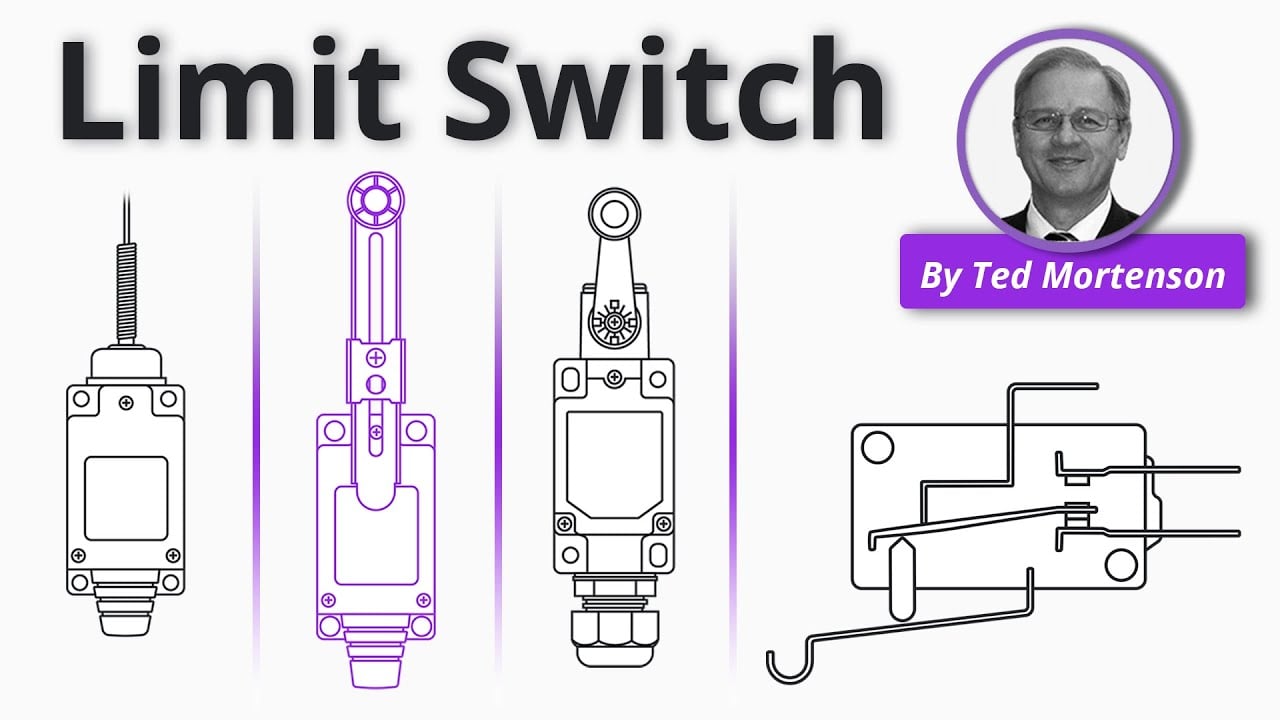
Limit Switch Explained par RealPars fournit un contexte général. Les décisions de projet nécessitent toujours les normes applicables et la documentation du produit.
Foire aux questions
Pourquoi utiliser un rouleau plutôt qu'un piston ordinaire ?
Un galet peut réduire le frottement de glissement lorsqu'une came en mouvement passe sur l'actionneur.
La came peut-elle approcher de n'importe quelle direction ?
Non. Utilisez la direction et l'angle autorisés par le dessin exact du fabricant.
Quelle est la course de dépassement nécessaire ?
Suffisant pour maintenir le fonctionnement dans les limites des tolérances sans dépasser la limite documentée ; utilisez les données exactes du modèle.
Un poussoir à galet améliore-t-il la capacité nominale électrique ?
Non. Le style d'actionneur ne remplace pas la vérification de la tension, du courant, de la catégorie de charge et du courant d'appel.
Décision finale
Approuvez le composant uniquement lorsque les limites documentées relatives à la mécanique, à l'électricité, à l'environnement, à l'ergonomie, à l'installation et à la maintenance correspondent toutes au système assemblé. Résolvez les inconnues grâce aux informations actuelles du fabricant et à des tests avant le lancement de la production.
Personnalisation
ONPOW undertakes a variety of custom needs for push-button development. Confirm whether packaging, marking or documentation OEM/ODM applies to Roller Plunger Limit Switch Selection for Industrial Machines in the quotation.
La quantité minimale d’ordre, le délai de livraison et les modalités commerciales ne sont pas indiqués ici ; veuillez les confirmer auprès de la direction commerciale. sales@onpow.com.



