

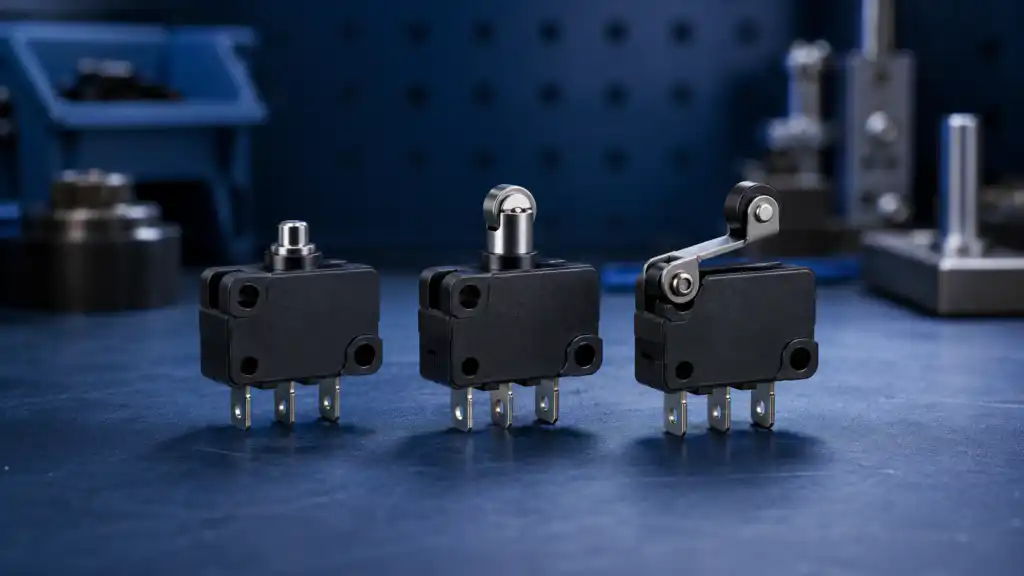
Les types d'actionneurs de fin de course convertissent le mouvement de la machine en un fonctionnement fiable du commutateur. Un plongeur accepte un mouvement axial direct, un galet réduit le frottis de glissement, un levier augmente la portée et modifie l'avantage mécanique, et une tige ou un bras souple tolère une plus grande variation d'approche. L'actionneur n'est pas une option esthétique : il détermine la direction d'approche, la force requise, la vitesse permise, la course, la répétabilité et l'exposition aux chocs. Ne choisissez l'actionneur qu'après avoir documenté le mouvement de la machine et la chaîne de cotes, puis vérifiez le dessin exact du commutateur et testez le mécanisme assemblé.
Règle de sélection : traitez l'appareil, l'actionneur, les contacts, le boîtier, le câblage, la logique de commande, l'utilisateur et le mouvement de la machine comme un seul système. Les exemples de produits n'illustrent que la forme ; l'aptitude finale doit provenir de la documentation actuelle pour le code de commande exact et de la validation dans l'équipement fini.
Comment fonctionne le mécanisme
L'actionneur transmet le mouvement externe à un mécanisme de contact interne à action brusque ou à action lente. Un fonctionnement fiable exige que la cible mobile franchisse le point de déclenchement tout en restant dans les limites autorisées de suroscillation et de force. Le mouvement de retour doit également franchir le point de réarmement. La forme de la cames, l'alignement, la vitesse, les vibrations et l'usure peuvent modifier la course effective ; par conséquent, un interrupteur qui clique sur un établi peut s'avérer peu fiable dans la machine.

Critères de sélection en un coup d'œil
| Zone de décision | Que vérifier | Raison technique |
|---|---|---|
| Plongeur droit | Abord axial direct avec un alignement étroitement contrôlé | Compact et répétable, mais mal adapté au chargement latéral. |
| Piston à rouleau | Approche directe où la cible glisse également sur l'actionneur | Le contact roulant réduit les frottements mais ajoute de la hauteur et une pièce rotative. |
| Levier de charnière | Une came s'approche par le côté et une portée supplémentaire est nécessaire | Le levier modifie la force et la course au niveau du plongeur interne. |
| Levier à galet | Déplacement répété de la came sur l'actionneur | Le galet réduit l'usure par glissement et aide une came à passer en douceur. |
| Levier réglable | Le rayon d'action doit être réglé lors de la configuration | L'ajustement apporte de la flexibilité mais doit être verrouillé et documenté. |
| Tige ou moustache | La position cible varie sur une zone plus vaste | La portée flexible tolère les désalignements mais réduit généralement la précision de positionnement. |
| Fourche ou tête spéciale | Le mécanisme nécessite un engagement bidirectionnel ou spécifique à l'application | À utiliser uniquement avec le diagramme de mouvement exact du fabricant. |
| Ensemble d'actionneur étanche | De la poussière, de l'huile, du spray ou de la condensation peuvent atteindre l'interrupteur | L'ensemble du boîtier et l'entrée de câble doivent correspondre à l'environnement. |
Ce tableau est intentionnellement qualitatif. Les limites numériques, les valeurs nominales, le couple, la force, la course, les déclarations environnementales et les valeurs d'endurance doivent être tirés de la fiche technique actuelle et évalués dans les conditions de l'application.
Processus de sélection détaillé
Plongeur droit
À vérifier : Approche axiale directe avec un alignement strictement contrôlé. Compact et répétable, mais mal adapté aux charges latérales. L'exigence doit être rédigée dans le cahier des charges du projet et rattachée au dessin de modèle exact ou à la fiche technique. Examiner la tolérance au pire cas, l'usure, la contamination, l'accès à la maintenance et l'utilisation abusive prévisible. Si la documentation disponible ne définit pas la limite, laisser le point ouvert pour confirmation par le fournisseur et tests d'échantillons plutôt que de substituer une hypothèse.
Piston à rouleau
À vérifier : Approche directe où la cible glisse également sur l'actionneur. Le contact roulant réduit le frottis mais ajoute de la hauteur et une pièce rotative. L'exigence doit être rédigée dans le cahier des charges du projet et rattachée au dessin de modèle exact ou à la fiche technique. Examiner la tolérance au pire cas, l'usure, la contamination, l'accès à la maintenance et l'utilisation abusive prévisible. Si la documentation disponible ne définit pas la limite, maintenir le point ouvert pour la confirmation du fournisseur et les tests d'échantillons plutôt que de substituer une hypothèse.
Levier de charnière
À vérifier : Une came s'approche par le côté et une portée supplémentaire est nécessaire. Le levier modifie la force et la course au niveau du plongeur interne. L'exigence doit être rédigée dans le cahier des charges du projet et rattachée au dessin de modèle exact ou à la fiche technique. Examinez la tolérance au pire cas, l'usure, la contamination, l'accès à la maintenance et la mauvaise utilisation prévisible. Si la documentation disponible ne définit pas la limite, laissez le point ouvert pour confirmation par le fournisseur et test d'échantillons plutôt que de substituer une hypothèse.
Levier à galet
À vérifier : Déplacement répété de la came sur l'actionneur. Le galet réduit l'usure par glissement et aide une came à passer en douceur. L'exigence doit être rédigée dans le cahier des charges du projet et liée au dessin de modèle exact ou à la fiche technique. Examiner la tolérance du pire des cas, l'usure, la contamination, l'accès à la maintenance et la mauvaise utilisation prévisible. Si la documentation disponible ne définit pas la limite, laisser le point ouvert pour confirmation par le fournisseur et test d'échantillon plutôt que de substituer une supposition.
Levier réglable
À vérifier : Le rayon d'action doit être réglé lors de la mise en service. Le réglage apporte de la flexibilité mais doit être verrouillé et documenté. L'exigence doit être rédigée dans le cahier des charges du projet et tracée jusqu'au dessin de modèle exact ou à la fiche technique. Examiner la tolérance dans le pire des cas, l'usure, la contamination, l'accès à la maintenance et l'utilisation détournée prévisible. Si la documentation disponible ne définit pas la limite, laisser le point ouvert pour confirmation par le fournisseur et tests d'échantillons plutôt que de substituer une supposition.
Tige ou moustache
À vérifier : La position cible varie sur une zone plus vaste. Une portée flexible tolère un désalignement mais réduit généralement la précision de positionnement. L'exigence doit être rédigée dans le cahier des charges du projet et rattachée au dessin de modèle exact ou à la fiche technique. Examinez la tolérance au pire cas, l'usure, la contamination, l'accès à la maintenance et l'utilisation abusive prévisible. Si la documentation disponible ne définit pas la limite, laissez le point ouvert pour confirmation par le fournisseur et test d'échantillons plutôt que de substituer une hypothèse.
Fourche ou tête spéciale
À vérifier : Le mécanisme nécessite un engagement bidirectionnel ou spécifique à l'application. À n'utiliser qu'avec le schéma de mouvement exact du fabricant. L'exigence doit être rédigée dans le cahier des charges du projet et rattachée au dessin de modèle ou à la fiche technique exacts. Examiner la tolérance au pire cas, l'usure, la contamination, l'accès à la maintenance et l'utilisation détournée prévisible. Si la documentation disponible ne définit pas la limite, laisser le point ouvert pour confirmation par le fournisseur et test d'échantillons plutôt que de substituer une hypothèse.
Ensemble d'actionneur étanche
À vérifier : De la poussière, de l'huile, du spray ou de la condensation peuvent atteindre l'interrupteur. Le boîtier complet et l'entrée de câble doivent correspondre à l'environnement. L'exigence doit être rédigée dans le cahier des charges du projet et tracée jusqu'au dessin de modèle exact ou à la fiche technique. Examinez la tolérance au pire cas, l'usure, la contamination, l'accès à la maintenance et la mauvaise utilisation prévisible. Si la documentation disponible ne définit pas la limite, laissez le point ouvert pour confirmation par le fournisseur et test d'échantillons plutôt que de substituer une supposition.

Examen de la demande
- Mappez le chemin cible complet, pas seulement sa position finale. Enregistrez la commande attendue, la réponse, le comportement de relâchement, la condition anormale et la preuve de recette pour la machine assemblée.
- Vérifier les angles d'approche et de départ aux extrêmes de tolérance. Enregistrer la commande attendue, la réponse, le comportement de déclenchement, la condition anormale et la preuve d'acceptation pour la machine assemblée.
- Empêchez l'actionneur de jouer le rôle de butée mécanique. Enregistrez la commande attendue, la réponse, le comportement de déclenchement, la condition anormale et les preuves de conformité pour la machine assemblée.
- Mesurer la surcourse disponible après le point de fonctionnement électrique. Enregistrer la commande attendue, la réponse, le comportement au relâchement, la condition anormale et les preuves d'acceptation pour la machine assemblée.
- Testez la vitesse lente, normale et maximale de la machine. Enregistrez la commande attendue, la réponse, le comportement de relâchement, la condition anormale et les preuves de conformité pour la machine assemblée.
Pour chaque application, inclure le démarrage, le fonctionnement normal, l'arrêt, la perte de courant, le rétablissement du courant, le mode de maintenance, le remplacement de composants et les défauts identifiés par l'évaluation des risques. Un interrupteur de commande général ne doit pas être considéré comme une fonction de sécurité complète.
Liste de contrôle de mise en service
- Geler le besoin. Indiquer l'action prévue, la condition normale, l'alimentation, la charge, le mouvement, l'environnement et l'utilisateur.
- Faites correspondre le code de commande. Comparez la pièce livrée avec le dessin approuvé, le schéma de contacts, l'actionneur, le style de borne et les accessoires.
- Inspecter l'installation. Vérifier l'alignement, les éléments de fixation, le dégagement arrière, le cheminement des câbles, le soulagement de traction, la protection des pièces sous tension et l'accès pour l'entretien.
- Tester chaque état. Vérifier le fonctionnement et le déclenchement aux extrêmes de tolérance, aux vitesses prévues, aux charges, avec des gants, en présence de contamination et dans diverses conditions environnementales.
- Tester les conditions anormales. Inclure les conducteurs débranchés, les mécanismes bloqués ou endommagés, la perte d'alimentation, la contamination et autres défauts crédibles.
- Enregistrez le résultat. Enregistrer le modèle, la révision, la méthode d'essai, les observations, les critères d'acceptation, la date et l'approbateur.
Erreurs courantes
- Choisir par la photographie du catalogue au lieu du dessin animé. Prévenez cela en affectant la vérification à un dessin, une fiche technique, un schéma de câblage ou un essai de mise en service avec un critère d'acceptation nommé.
- Permettre à un profil de came de frapper un levier de côté. Prévenez cela en affectant la vérification à un dessin, une fiche technique, un schéma de câblage ou un essai de mise en service avec un critère d'acceptation nommé.
- Utiliser une course excessive pour compenser un mauvais alignement. Prévenez cela en affectant la vérification à un dessin, une fiche technique, un schéma de câblage ou un essai de mise en service avec un critère d'acceptation nommé.
- En faisant abstraction du point de déclenchement et de la marge de réarmement. Prévenez cela en affectant la vérification à un dessin, une fiche technique, un schéma de câblage ou un essai de mise en service avec un critère d'acceptation nommé.
- En supposant qu'un rouleau compresseur rende chaque impact acceptable. Prévenez cela en affectant la vérification à un dessin, une fiche technique, un schéma de câblage ou un essai de mise en service avec un critère d'acceptation nommé.
Que faut-il inclure dans une demande de prix
Fournissez l'application, le marché cible, les normes applicables, la fonction de la machine, l'alimentation et la charge, l'interface de commande, la logique de contact, le dessin mécanique, la trajectoire de mouvement, les dimensions du panneau, la méthode de câblage, l'environnement, la fréquence de fonctionnement, la quantité, les besoins en documentation et le plan de validation des échantillons. Demandez au fournisseur d'identifier les hypothèses et les exceptions. ONPOW propose des produits pertinents dans sa famille de produits spécifique à une application et le plus large gamme de produits de contrôle industriel.
Guides ONPOW associés
- Comment fonctionne un micro-interrupteur
- Micro-interrupteur vs fin de course
- Vie mécanique contre vie électrique
Références autorisées
- appareils de circuit de commande CEI 60947-5-1
- CEI 60529 degrés de protection procurés par les enveloppes
- Exigences d'OSHA concernant la protection des machines
- Exigences de sécurité électrique de l'OSHA
Vidéo éducative
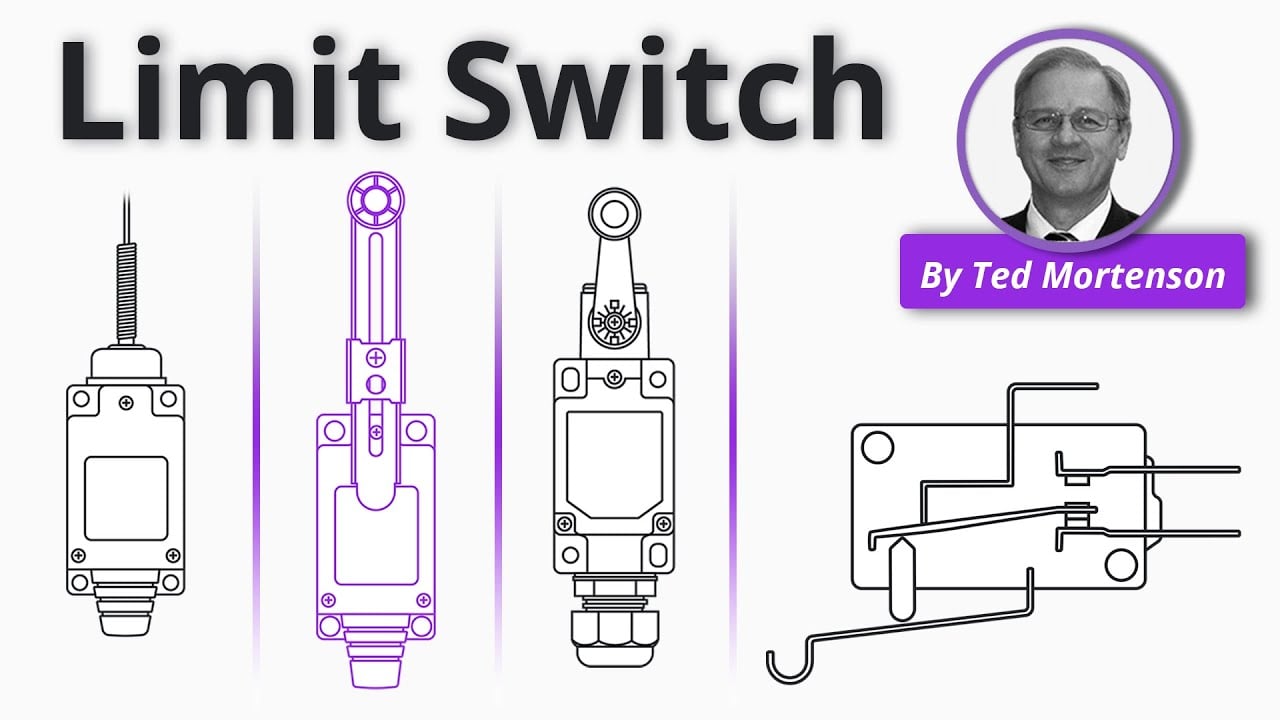
Limit Switch Explained par RealPars fournit un contexte général. Les décisions de projet nécessitent toujours les normes applicables et la documentation du produit.
Foire aux questions
Quel actionneur est le plus précis ?
La précision dépend de l'interrupteur exact, du montage, de la cague, de la force, de la température, de l'usure et de la chaîne de cotes. Un poussoir est souvent direct, mais les données du modèle et le test assemblé décident.
Quand faut-il utiliser un rouleau ?
Utilisez un galet lorsqu'une came ou une cible se déplace sur l'actionneur et qu'un frottement de glissement réduit est utile.
Un interrupteur de fin de course peut-il arrêter mécaniquement le déplacement d'une machine ?
Non. La machine nécessite une butée mécanique séparée lorsqu'une telle butée est requise ; l'actionneur du commutateur doit rester dans les limites de sa course documentée.
Un micro-interrupteur est-il la même chose qu'un interrupteur de fin de course ?
Un micro-interrupteur peut constituer l'élément de commutation interne, tandis qu'un interrupteur de fin de course désigne souvent l'ensemble complet de détection de position installé.
Décision finale
Approuvez le composant uniquement lorsque les limites documentées relatives à la mécanique, à l'électricité, à l'environnement, à l'ergonomie, à l'installation et à la maintenance correspondent toutes au système assemblé. Résolvez les inconnues grâce aux informations actuelles du fabricant et à des tests avant le lancement de la production.
Customization
ONPOW undertakes a variety of custom needs for push-button development. Confirm whether packaging, marking or documentation OEM/ODM applies to Limit Switch Actuator Types: How to Match Motion, Force, and Travel in the quotation.
Minimum order quantity, lead time and trade terms are not published here; confirm them with sales at sales@onpow.com.



