

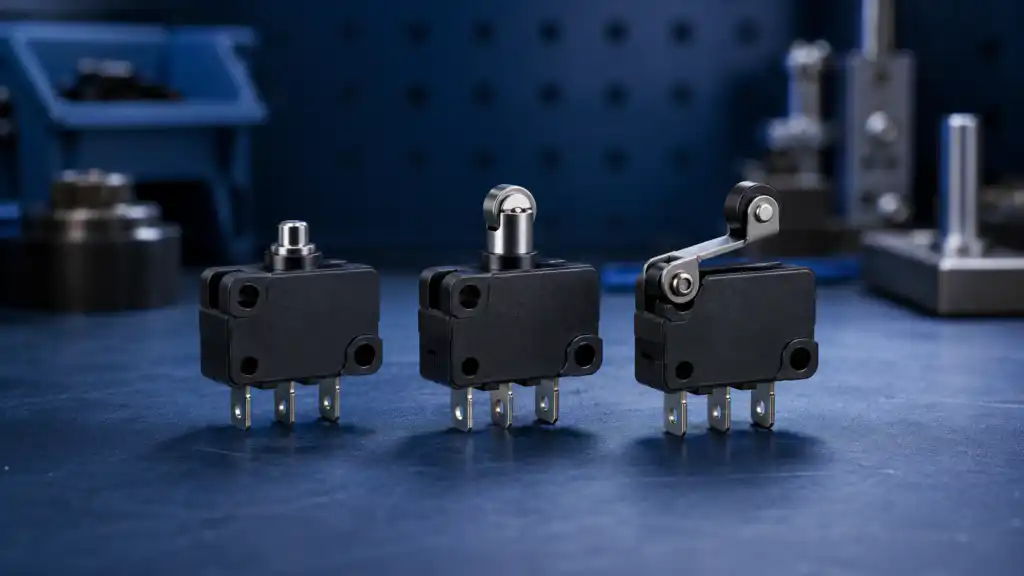
Los tipos de actuadores de interruptores de límite convierten el movimiento de la máquina en una operación de conmutación confiable. Un émbolo acepta el movimiento axial directo, un rodillo reduce la fricción por deslizamiento, una palanca aumenta el alcance y cambia la ventaja mecánica, y una varilla o bigote tolera una mayor variación en la dirección de aproximación. El actuador no es una opción estética: determina la dirección de aproximación, la fuerza requerida, la velocidad permitida, el recorrido, la repetibilidad y la exposición a impactos. Seleccione el actuador únicamente después de documentar el movimiento de la máquina y la acumulación de tolerancias, luego verifique el plano exacto del interruptor y pruebe el mecanismo ensamblado.
Regla de selección: trate el dispositivo, el actuador, los contactos, la carcasa, el cableado, la lógica de control, el usuario y el movimiento de la máquina como un solo sistema. Los ejemplos de productos ilustran únicamente la forma; la idoneidad final debe provenir de la documentación actual para el código de pedido exacto y de la validación en el equipo terminado.
Cómo funciona el mecanismo
El actuador transfiere el movimiento externo a un mecanismo de contacto interno de acción rápida o acción lenta. Un funcionamiento fiable requiere que el objetivo móvil cruce el punto de operación manteniéndose dentro de los límites permitidos de sobrepaso y fuerza. El movimiento de liberación también debe cruzar el punto de rearme. La forma de la leva, la alineación, la velocidad, la vibración y el desgaste pueden alterar la carrera efectiva, por lo que un interruptor que hace clic en un banco de pruebas puede seguir siendo poco fiable en la máquina.

Criterios de selección de un vistazo
| Área de decisión | Qué verificar | Razón de ingeniería |
|---|---|---|
| Émbolo recto | Abordaje axial directo con alineación estrictamente controlada | Compacto y repetible, pero poco adecuado para la carga lateral. |
| Émbolo de rodillo | Enfoque directo en el que el objetivo también se desliza a través del actuador | El contacto de rodadura reduce la fricción, pero añade altura y una pieza giratoria. |
| Palanca de bisagra | Una leva se aproxima por el costado y se necesita alcance adicional | La palanca cambia la fuerza y el recorrido en el émbolo interno. |
| Palanca de rodillo | Desplazamiento repetido de la leva a través del actuador | El rodillo reduce el desgaste por deslizamiento y ayuda a que una leva pase sin problemas. |
| Palanca ajustable | El radio de operación debe ajustarse durante la configuración | El ajuste añade flexibilidad, pero debe bloquearse y documentarse. |
| Varilla o bigote | La posición objetivo varía en un área más amplia | El alcance flexible tolera la desalineación pero por lo general reduce la precisión posicional. |
| Horquilla o cabeza especial | El mecanismo requiere un compromiso bidireccional o específico para cada aplicación | Utilizar únicamente con el diagrama de movimiento exacto del fabricante. |
| Conjunto de actuador sellado | El polvo, el aceite, el aerosol o la condensación pueden llegar al interruptor | La carcasa completa y la entrada de cables deben adaptarse al entorno. |
Esta tabla es intencionalmente cualitativa. Los límites numéricos, clasificaciones, par, fuerza, recorrido, declaraciones ambientales y valores de resistencia deben tomarse de la hoja de datos actual y evaluarse bajo las condiciones de la aplicación.
Proceso de selección detallado
Émbolo recto
Qué verificar: Enfoque axial directo con alineación estrictamente controlada. Compacto y repetible, pero poco adecuado para cargas laterales. El requisito debe redactarse en la especificación del proyecto y rastrearse hasta el dibujo del modelo exacto o la ficha técnica. Revise la tolerancia en el peor de los casos, el desgaste, la contaminación, el acceso para mantenimiento y el uso indebido previsible. Si la documentación disponible no define el límite, mantenga el punto abierto para la confirmación del proveedor y la prueba de muestras en lugar de sustituirlo por una suposición.
Émbolo de rodillo
Qué verificar: Enfoque directo en el que el objetivo también se desliza sobre el actuador. El contacto rodante reduce la fricción pero añade altura y una pieza giratoria. El requisito debe escribirse en la especificación del proyecto y rastrearse hasta el dibujo del modelo exacto o la ficha técnica. Revise la tolerancia en el peor de los casos, el desgaste, la contaminación, el acceso para mantenimiento y el uso indebido previsible. Si la documentación disponible no define el límite, mantenga el punto abierto para la confirmación del proveedor y las pruebas de muestras en lugar de sustituirlo por una suposición.
Palanca de bisagra
Qué verificar: Una leva se aproxima por el lateral y se necesita mayor alcance. La palanca modifica la fuerza y el recorrido en el émbolo interno. El requisito debe redactarse en la especificación del proyecto y vincularse al plano del modelo exacto o a la hoja de datos. Revise la tolerancia en el peor de los casos, el desgaste, la contaminación, el acceso para mantenimiento y el uso indebido previsible. Si la documentación disponible no define el límite, mantenga el punto abierto para la confirmación del proveedor y la prueba de muestras en lugar de sustituirlo por una suposición.
Palanca de rodillo
Qué verificar: Carrera repetida de la leva a través del actuador. El rodillo reduce el desgaste por deslizamiento y ayuda a que una leva pase sin problemas. El requisito debe escribirse en la especificación del proyecto y rastrearse hasta el plano del modelo exacto o la hoja de datos. Revise la tolerancia en el peor de los casos, el desgaste, la contaminación, el acceso para mantenimiento y el uso indebido previsible. Si la documentación disponible no define el límite, mantenga el punto abierto para la confirmación del proveedor y la prueba de muestras en lugar de sustituirlo por una suposición.
Palanca ajustable
Qué verificar: El radio de operación debe ajustarse durante la configuración. El ajuste aporta flexibilidad, pero debe bloquearse y documentarse. El requisito debe redactarse en la especificación del proyecto y rastrearse hasta el dibujo del modelo exacto o la hoja de datos. Revise la tolerancia en el peor de los casos, el desgaste, la contaminación, el acceso para mantenimiento y el uso indebido previsible. Si la documentación disponible no define el límite, mantenga el punto abierto para la confirmación del proveedor y la prueba de muestras en lugar de sustituirlo por una suposición.
Varilla o bigote
Qué verificar: La posición objetivo varía en un área más amplia. El alcance flexible tolera la desalineación pero por lo general reduce la precisión posicional. El requisito debe escribirse en la especificación del proyecto y rastrearse hasta el dibujo del modelo exacto o la hoja de datos. Revise la tolerancia en el peor de los casos, el desgaste, la contaminación, el acceso para mantenimiento y el uso indebido previsible. Si la documentación disponible no define el límite, mantenga el punto abierto para la confirmación del proveedor y la prueba de muestras en lugar de sustituir una suposición.
Horquilla o cabeza especial
Qué verificar: El mecanismo requiere un acoplamiento bidireccional o específico para la aplicación. Utilice únicamente el diagrama de movimiento exacto del fabricante. El requisito debe incluirse en la especificación del proyecto y rastrearse hasta el dibujo del modelo o la hoja de datos exacta. Revise la tolerancia en el peor de los casos, el desgaste, la contaminación, el acceso para mantenimiento y el uso indebido previsible. Si la documentación disponible no define el límite, mantenga el punto abierto para la confirmación del proveedor y la prueba de muestras en lugar de sustituirlo por una suposición.
Conjunto de actuador sellado
Qué verificar: Polvo, aceite, aerosol o condensación pueden llegar al interruptor. Toda la carcasa y la entrada de cables deben adecuarse al entorno. El requisito debe redactarse en la especificación del proyecto y rastrearse hasta el plano del modelo exacto o la ficha técnica. Revise la tolerancia en el peor de los casos, el desgaste, la contaminación, el acceso para mantenimiento y el uso indebido previsible. Si la documentación disponible no define el límite, mantenga el punto abierto para la confirmación del proveedor y la prueba de muestras en lugar de sustituirlo por una suposición.

Revisión de la solicitud
- Mapee la ruta de destino completa, no solo su posición final. Registre el comando esperado, la respuesta, el comportamiento de liberación, la condición anormal y la evidencia de aceptación para la máquina ensamblada.
- Verifique los ángulos de ataque y salida en los extremos de tolerancia. Registre el comando esperado, la respuesta, el comportamiento de liberación, la condición anormal y la evidencia de aceptación para la máquina ensamblada.
- Evite que el actuador cumpla la función de tope mecánico duro. Registre el comando esperado, la respuesta, el comportamiento de liberación, la condición anormal y la evidencia de aceptación para la máquina ensamblada.
- Mida el recorrido excesivo disponible después del punto de operación eléctrica. Registre el comando esperado, la respuesta, el comportamiento de liberación, la condición anormal y la evidencia de aceptación para la máquina ensamblada.
- Pruebe la velocidad de la máquina lenta, normal y máxima. Registre el comando esperado, la respuesta, el comportamiento de liberación, la condición anormal y la evidencia de aceptación para la máquina ensamblada.
Para cada aplicación, incluya el inicio, la operación normal, el apagado, la pérdida de energía, la restauración de energía, el modo de mantenimiento, el reemplazo de componentes y las fallas identificadas por la evaluación de riesgos. Un interruptor de control general no debe tratarse como una función de seguridad completa.
Lista de verificación de puesta en marcha
- Congelar el requisito. Indique la acción prevista, condición normal, alimentación, carga, movimiento, entorno y usuario.
- Coincidir con el código de pedido. Compare la pieza entregada con el dibujo aprobado, el esquema de contactos, el actuador, el tipo de terminal y los accesorios.
- Inspeccionar la instalación. Verificar alineación, elementos de sujeción, holgura trasera, recorrido de cables, alivio de tensión, protección de partes activas y acceso para mantenimiento.
- Prueba cada estado. Verificar el funcionamiento y la liberación en los extremos de tolerancia, velocidades previstas, cargas, guantes, contaminación y condiciones ambientales.
- Probar condiciones anormales. Incluya conductores desconectados, mecanismos bloqueados o dañados, pérdida de energía, contaminación y otras fallas creíbles.
- Registrar el resultado. Guardar modelo, revisión, método de prueba, observaciones, criterios de aceptación, fecha y aprobador.
Errores comunes
- Elegir por la fotografía del catálogo en lugar del dibujo en movimiento. Evite esto asignando la comprobación a un plano, hoja de datos, registro de cableado o prueba de puesta en marcha con un criterio de aceptación nombrado.
- Permitir que un perfil de leva golpee una palanca lateralmente. Evite esto asignando la comprobación a un plano, hoja de datos, registro de cableado o prueba de puesta en marcha con un criterio de aceptación nombrado.
- Utilizar un recorrido excesivo para compensar una mala alineación. Evite esto asignando la comprobación a un plano, hoja de datos, registro de cableado o prueba de puesta en marcha con un criterio de aceptación nombrado.
- Ignorando el punto de liberación y el margen de reinicio. Evite esto asignando la comprobación a un plano, hoja de datos, registro de cableado o prueba de puesta en marcha con un criterio de aceptación nombrado.
- Asumiendo que un rodillo hace que cada impacto sea aceptable. Evite esto asignando la comprobación a un plano, hoja de datos, registro de cableado o prueba de puesta en marcha con un criterio de aceptación nombrado.
Qué incluir en una solicitud de cotización (RFQ)
Proporcione la aplicación, el mercado objetivo, las normas aplicables, la función de la máquina, la alimentación y la carga, la interfaz de control, la lógica de contactos, el dibujo mecánico, la trayectoria de movimiento, las dimensiones del panel, el método de cableado, el entorno, la frecuencia de operación, la cantidad, las necesidades de documentación y el plan de validación de muestras. Pida al proveedor que identifique las suposiciones y excepciones. ONPOW ofrece productos relevantes en su familia de productos específica de la aplicación y lo más amplio gama de productos de control industrial.
Guías relacionadas de ONPOW
- Cómo funciona un microinterruptor
- Microinterruptor vs interruptor de límite
- Vida mecánica vs. vida eléctrica
Referencias autorizadas
- aparatos para circuitos de control IEC 60947-5-1
- IEC 60529 grados de protección proporcionados por las envolventes
- Requisitos de protección de maquinaria de OSHA
- Requisitos de seguridad eléctrica de OSHA
Video educativo
Limit Switch Explained de RealPars proporciona antecedentes generales. Las decisiones de proyecto aún requieren las normas aplicables y la documentación del producto.
Preguntas frecuentes
¿Qué actuador es el más preciso?
La precisión depende del interruptor exacto, el montaje, la leva, la fuerza, la temperatura, el desgaste y la acumulación de tolerancias. Un émbolo suele ser directo, pero los datos del modelo y la prueba ensamblada lo deciden.
¿Cuándo se debe usar un rodillo?
Utilice un rodillo cuando una leva o un objetivo se desplace a través del actuador y sea útil reducir la fricción por deslizamiento.
¿Puede un interruptor de límite detener el desplazamiento de una máquina mecánicamente?
No. La máquina necesita un tope mecánico independiente cuando sea necesario; el actuador del interruptor debe permanecer dentro de su recorrido documentado.
¿Es un microinterruptor lo mismo que un interruptor de límite?
Un microinterruptor puede ser el elemento de conmutación interno, mientras que un interruptor de límite a menudo describe el conjunto completo de detección de posición instalado.
Decisión final
Apruebe el componente únicamente cuando los límites documentados de mecánica, electricidad, medio ambiente, usabilidad, instalación y mantenimiento se ajusten al sistema ensamblado. Resuelva las incógnitas mediante información actual del fabricante y pruebas antes de la liberación para producción.
Customization
ONPOW undertakes a variety of custom needs for push-button development. Confirm whether packaging, marking or documentation OEM/ODM applies to Limit Switch Actuator Types: How to Match Motion, Force, and Travel in the quotation.
Minimum order quantity, lead time and trade terms are not published here; confirm them with sales at sales@onpow.com.



