

A 19mm push button switch is the right panel cutout when you need more finger reach and legend space than a typical 16mm layout, but you do not need the modular accessory ecosystem that usually drives a 22mm platform. Lock cutout diameter, rear depth, IP/IK, and terminal style before you freeze color, LED rings, or legend artwork.
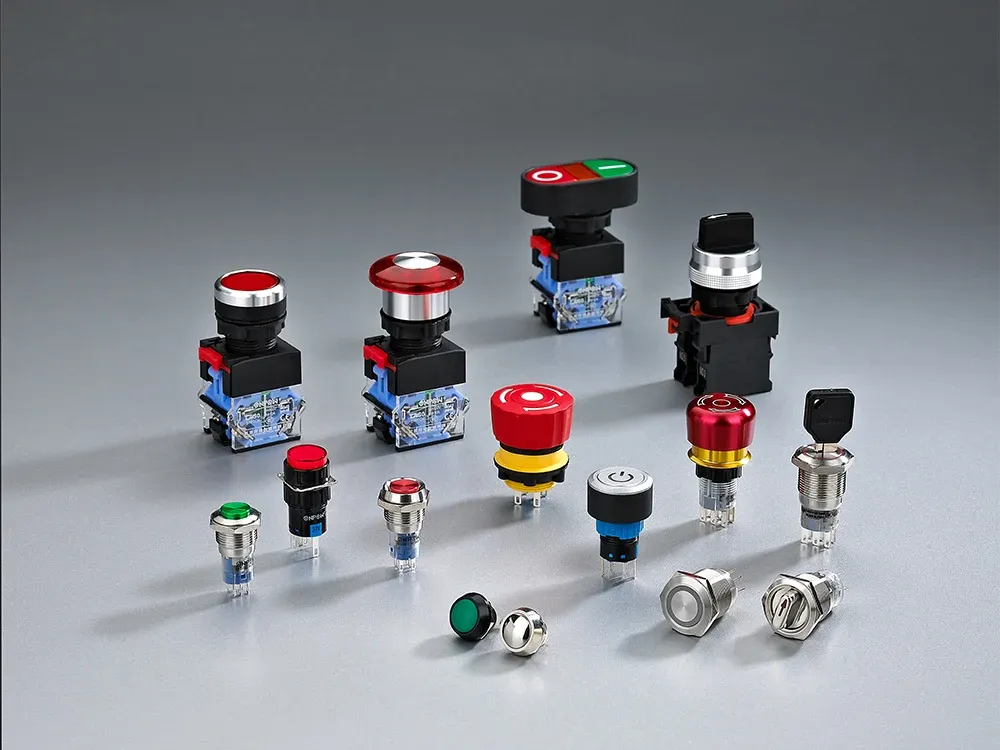
Part 1. When is a 19mm push button switch the right cutout between 16mm and 22mm?
Panel teams rarely choose diameter for aesthetic reasons alone. The cutout decides punch tooling, legend plate windows, operator target size, and which accessory families remain available later in the project.
Treat 19mm as a mid-size metal path:
- choose 16mm when density and compact doors dominate, and operators can still hit the target reliably;
- choose 19mm when gloves, maintenance access, or slightly larger legends matter more than maximum packing density;
- choose 22mm when modular contact blocks, standardized machine-builder accessories, or existing plant standards already lock the hole size.
| Cutout family | Typical panel goal | Common trade-off |
|---|---|---|
| 16mm | Maximum switch density on compact doors | Smaller finger target and legend window |
| 19mm | Mid-size metal HMI with better reach than 16mm | Less modular ecosystem than many 22mm platforms |
| 22mm | Modular industrial standard accessories | Larger front footprint and tooling commitment |
For denser compact layouts, start with the 16mm push button switch guide. When modular 22mm tooling already owns the plant standard, use the 22mm push button switch guide instead of forcing a mid-size retrofit.
More diameter does not automatically mean more switched-load capacity. Electrical suitability still depends on the exact model fields and the circuit duty—not on the hole saw size stamped on the drawing.
Part 2. How do panel cutout, mounting depth, and operator reach drive the 19mm choice?
Mechanical fit fails more projects than color selection. A switch that matches the schematic can still collide with DIN rails, terminal blocks, or cable ducts behind the door.
Document these inputs before RFQ:
- front-panel cutout diameter and tolerance;
- panel thickness and nut engagement;
- rear-body length plus wire bend radius;
- adjacent keep-out zones for lamps, meters, and hinges;
- operator access with or without gloves;
- legend plate thickness and printable area.
| Mechanical check | Why it matters at 19mm |
|---|---|
| Cutout vs punch template | Prevents oval holes that bind the bushing |
| Rear clearance | Avoids collisions after terminal wiring |
| Operator target size | Improves hit rate versus smaller 16mm actuators |
| Legend window | Supports clearer marking without jumping to 22mm |
Tip: Align device-class language in the BOM with control-circuit device standards, then verify the manufacturer mounting drawing for the exact SKU—standards define scope, not your hole pattern (IEC 60947-5-1 control circuit devices).
From the field: Panel threads often ask whether a door already punched for 22mm can accept a 19mm actuator “without redoing the legend plate”—that question is a mechanical retrofit problem, not proof that mid-size metal is universally interchangeable. — industrial panel cutout discussion pattern
If gloved operators miss 16mm targets during commissioning, 19mm is frequently the smallest step that improves reach without rewriting the entire accessory strategy around 22mm modular blocks.
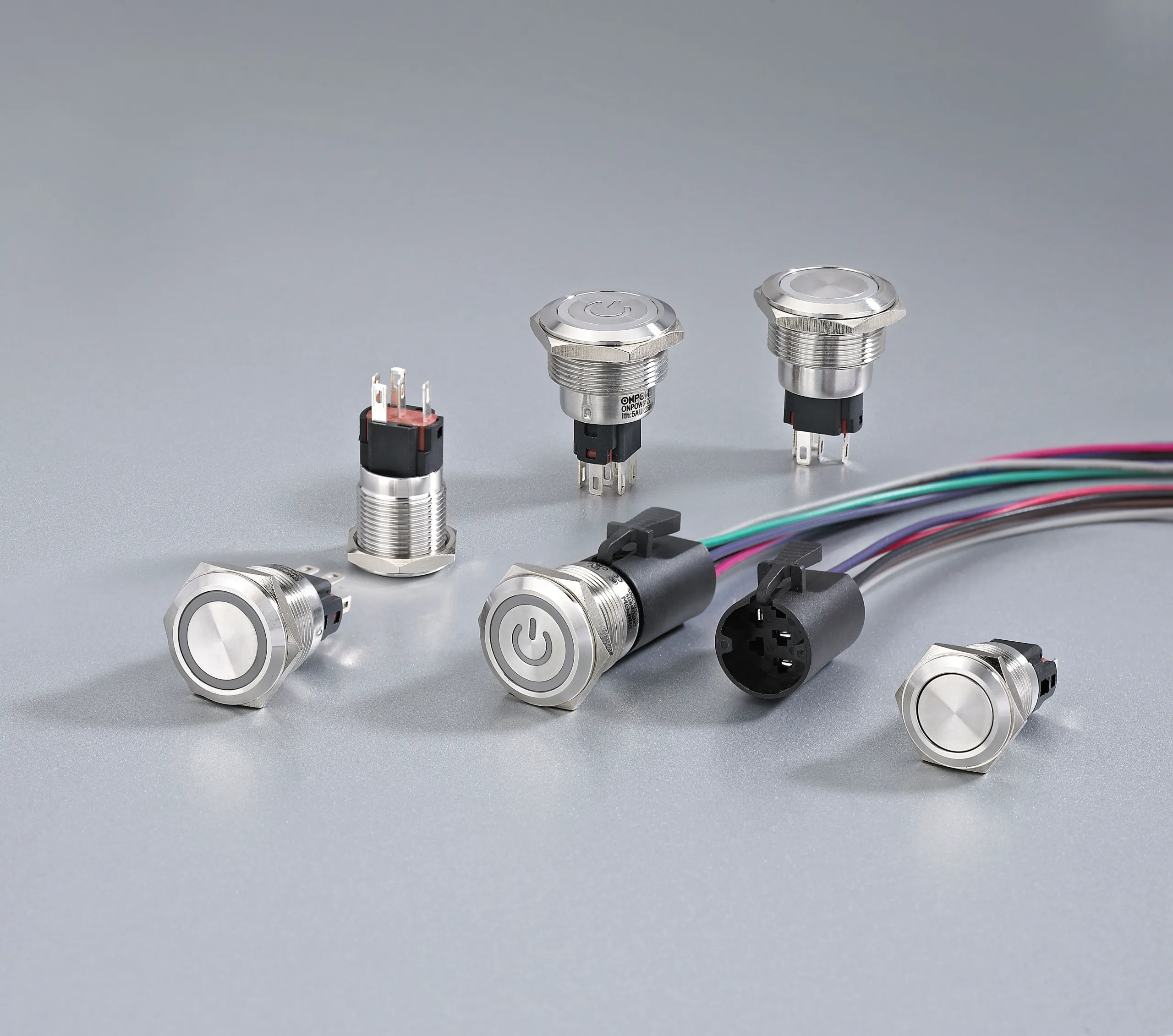
Part 3. Which electrical fields and contact layouts matter at φ19mm?
Read the catalogue fields as named evidence, not as marketing adjectives. For industrial control panels, buyers usually compare insulation voltage, thermal current, contact arrangement, and expected life under the stated conditions.
On the ONPOW LAS1GQ-11/S 19mm stainless push button page, listed electrical and life fields include Ui 250V, Ith 20A, mechanical life ≥1,000,000, and electrical life ≥50,000. Those numbers describe documented model attributes; they do not, by themselves, prove a utilization category for every inductive power load.
Circuit questions that still block a mid-size metal choice:
- How many NO/NC paths does the schematic need in one actuator?
- Is the branch a control-circuit command or a power path?
- Will illumination share depth and wiring with the contact path?
- Are pin terminals acceptable, or does the harness require screw terminals?
| Field on the page | What it supports | What it does not prove alone |
|---|---|---|
| Ui | Insulation-voltage context for the listed model | Full machine safety architecture |
| Ith | Conventional thermal-current context for the listed model | Every switched-load or motor duty |
| Mechanical / electrical life | Endurance targets under stated test framing | Unlimited shop-floor abuse without review |
| Contact / terminal style | Wiring method and assembly practice | Interchange with unrelated cutout families |
Important: Do not assume a larger cutout always carries a higher usable switching capacity—compare the named model fields and the circuit duty before batch drilling (IEC 60947-5-1 device scope).
When the project needs illuminated indication with screw terminals on the same mid-size platform, review the optional 19mm ring LED screw-terminal model after the base cutout decision is frozen.
Part 4. How do IP, IK, and materials change 19mm suitability?
Environment and abuse resistance often decide whether a mid-size metal actuator belongs on the door. IP describes ingress protection; IK describes mechanical impact degrees. Neither replaces electrical-duty evidence.
IEC framing:
For LAS1GQ-11/S, the product page lists front IP65, with momentary IP67 made to order, plus IK09. Materials listed on that page include silver alloy contacts, a stainless button/body, and a PC base. Use those statements only within the model evidence boundary—do not invent washdown certificates or impact scores beyond the page.
Material and sealing checks for RFQ:
- front gasket compression against the stated panel thickness;
- whether washdown hits the operator face or the full enclosure;
- stainless preference versus plastic for vandal or abrasion risk;
- base material and terminal style compatibility with harness standards.
For a broader materials decision across product lines, see the metal vs plastic push button comparison in the ONPOW blog guides cluster.
Part 5. What mistakes push buyers toward 16mm or 22mm instead?
Fit Boundary
Choose 19mm when the door needs a mid-size metal target, 16mm feels too small for operators or legends, and the project does not depend on a 22mm modular accessory stack.
Stay on 16mm when packing density is the primary constraint and reach/legend checks already pass.
Move to 22mm when plant standards, modular contact blocks, or accessory continuity dominate the BOM.
Do not use this guide for unverified hole-size swaps, emergency-stop functions, or power switching claimed from diameter or Ith alone.
Recurring mistakes that reverse a 19mm decision after drilling:
- copying a competitor photo without checking rear depth;
- assuming any 19mm stainless unit drops into any 22mm hole;
- freezing LED artwork before terminal and IP options are confirmed;
- treating “metal = always better” without checking cycles and IP face;
- skipping legend-plate redesign when target size changes.
If the review shows modular growth or standardized 22mm tooling, stop the mid-size order and reopen the diameter decision before production.
Part 6. Which ONPOW 19mm stainless models fit documented panels?
After cutout, reach, IP/IK, and circuit checks align, map the requirement to ONPOW’s documented φ19mm stainless options.
| Need | Model path | Page-listed notes |
|---|---|---|
| Base mid-size stainless, pin terminal | LAS1GQ-11/S | φ19mm; Ui 250V; Ith 20A; mech ≥1,000,000; elec ≥50,000; front IP65 (momentary IP67 MTO); IK09; stainless button/body; PC base |
| Illuminated ring + screw terminal | LAS1GQ-11E/L/S | Same electrical/IP/IK class notes on its product page; screw terminal; PA base |
Product recommendation: start with LAS1GQ-11/S when the panel drawing calls for a φ19mm stainless actuator with pin terminals and the listed electrical/IP/IK fields cover the control-circuit use case. Move to the ring-LED screw variant only when illumination and screw termination are firm requirements.
Why not default elsewhere:
- do not force 19mm onto a plant already standardized on 22mm modular blocks;
- do not specify 19mm only for density when 16mm already meets operator and legend needs;
- do not read Ith 20A as a validated motor or direct-load switching claim for every application.
Part 7. What should buyers document before requesting a 19mm quote?
Send a complete RFQ package so engineering can confirm fit without guesswork:
- panel cutout drawing (φ19mm target) and layout revision;
- quantity and destination documentation needs;
- momentary or maintained operation;
- NO/NC contact requirement per circuit;
- Ui / Ith expectations and actual control-circuit voltages/currents;
- front IP target and whether IP67 MTO is required;
- IK or abuse notes for the operator face;
- terminal preference (pin vs screw) and wire gauge;
- illumination / legend specification, if any;
- required materials (for example stainless front) and delivery timing.
Attach section views when rear clearance is tight. Submit the package through send cutout drawings and quantity so the mid-size selection can be confirmed against the exact SKU drawing.
Next step: review the LAS1GQ-11/S 19mm stainless product page, then send the RFQ checklist above for a model-level confirmation.

FAQs
What panel cutout do I need for a 19mm push button switch?
Plan for a φ19mm installation diameter per the manufacturer mounting drawing. Verify panel thickness, nut engagement, gasket compression, and rear clearance before releasing the punch program.
When should I choose 19mm instead of 16mm or 22mm?
Choose 19mm when operators or legends need more space than 16mm provides, but the project does not require a 22mm modular accessory platform. Keep 16mm for density-first doors and 22mm for modular plant standards.
Are 19mm push buttons suitable for industrial control panels?
Yes, when cutout, ratings, IP/IK, and operator access are documented for the control-circuit use case. Suitability is model-specific—not guaranteed by the diameter label alone.
What IP rating do metal 19mm push buttons typically list?
Many industrial metal fronts publish IP65-class front protection, with higher options depending on the model and order path. ONPOW LAS1GQ-11/S lists front IP65, with momentary IP67 made to order—confirm the exact SKU note for your BOM.
Does a larger cutout always mean a higher current rating?
No. Current-related fields such as Ith are model attributes. A larger hole improves mechanical interface options; it does not automatically increase usable switching capacity.
Can I replace a 22mm switch with a 19mm actuator?
Not without reviewing the cutout, bushing, legend plate, rear depth, and accessory plan. Treat diameter swaps as redesigns, not drop-in substitutions.
What should an RFQ include for a 19mm stainless push button?
Include cutout drawings, quantity, contact arrangement, voltages/currents, IP/IK targets, terminal type, illumination/legend needs, material preference, and delivery documentation. Incomplete RFQs force diameter guesses after the panel is already punched.



