Push button test laboratory accreditation scope review starts with the issuing laboratory, its location and the specific activity claimed in the report. An accreditation logo does not mean that every test offered by that organisation is covered. Buyers should verify the relevant scope through the accreditation body’s records and then connect the report to the ordered product. This guide explains that purchasing workflow. It does not accredit a laboratory, certify an ONPOW switch or guarantee acceptance in a particular market. Final evidence requirements belong to the project and its responsible technical reviewer.
Separate three different approvals
A purchasing file often contains a supplier management certificate, a laboratory report and a product approval document. Establish the purpose of each before comparing them. A document about an organisation’s management system should not be renamed as proof that a particular laboratory method or product configuration is approved.
The ILAC accreditation overview explains the role of independent assessment of specific conformity assessment activities. For a buyer, the important question is what activity was recognised, rather than whether a familiar logo appears somewhere in the supplier’s folder.
Keep product applicability as a separate decision. Even when the issuing laboratory and claimed activity are verified, the report may concern a different specimen or requirement. Laboratory scope review helps establish confidence in the evidence source; it does not automatically resolve whether that evidence satisfies the equipment’s acceptance conditions.
Start with the report issuer
Copy the laboratory’s legal name, site address, report number and issue date from the original report. Keep those details separate from the name of the company that sold the test service. A quotation may come from an intermediary while the work is performed elsewhere, so request clarification when the identities differ.
Ask which location performed the activity relevant to the purchasing decision. A large laboratory group can have several sites. The review should identify the site represented in the report rather than assuming that every location has the same recognised activities.
Preserve the original document while conducting these checks. Do not edit the laboratory name, add a logo or combine pages from several reports into a document that looks like a new original. A comparison note can explain relationships without changing the evidence being reviewed.
Find the authoritative directory entry
The ILAC FAQs explain that accreditation bodies maintain records of their accredited organisations and that ILAC itself does not issue test reports. Use the relevant body’s directory to verify the laboratory and obtain the scope documentation rather than relying entirely on a supplier-hosted copy.
Follow independently established contact details if a report or certificate needs clarification. Avoid using only a telephone number inserted into an unverified forwarded message. Record the enquiry date and the response so that the outcome can be understood by another reviewer.
A current directory check and an older report answer related but different questions. If the report is historical, ask about the status applicable to the activity and date at issue where that matters to acceptance. Do not assume a present listing resolves every question about past work or that a later change automatically invalidates a historical result.
Read the scope at activity level
The ILAC guidance catalogue identifies G18 as guidance on describing scopes of accreditation. Use the actual scope document to locate the relevant activity, with the assistance of the laboratory or accreditation body when necessary. Similar terminology is a reason to clarify, not to declare an exact match.
Look for the method or technical activity and any limitations stated in the scope. Where the document refers to a flexible arrangement or another controlled list, ask how the claimed work is covered. Buyers should not invent their own interpretation of a scope format that they do not understand.
The following table is an evidence collection tool. It does not make a regulatory acceptance decision or impose one universal scope format on every accreditation body.
| Review field | Evidence to retain | Clarification when unclear |
|---|---|---|
| Issuing identity | Legal name and report details | Which organisation issued the result? |
| Laboratory site | Address connected to the work | Which location performed this activity? |
| Accreditation record | Directory entry and scope issue | What recognised status is being claimed? |
| Technical activity | Relevant method or activity entry | Is the particular work covered? |
| Report date | Issue and test dates where available | Which status applies to this work? |
| Product relationship | Sample designation and revision | Does the evidence concern the ordered configuration? |
Compare scope and report without overstating either
Create a short comparison note with references to the relevant report pages and scope entry. Quote identifiers accurately, but do not rewrite technical limitations into broader claims. If the method designation differs, send a specific question to the issuer and preserve its response.
A report may include several activities with different status. Ask the laboratory to identify the status of the work relevant to your requirement. Do not assume that a cover logo applies identically to every statement, annex or externally provided result in a document.
Where subcontracted or externally provided work is involved, ask who performed it and how it is identified in the report. The objective is traceability. The project reviewer can then determine whether the resulting evidence package meets the contractual and technical requirement without the buyer guessing how responsibility was divided.
Connect the report to the ONPOW configuration
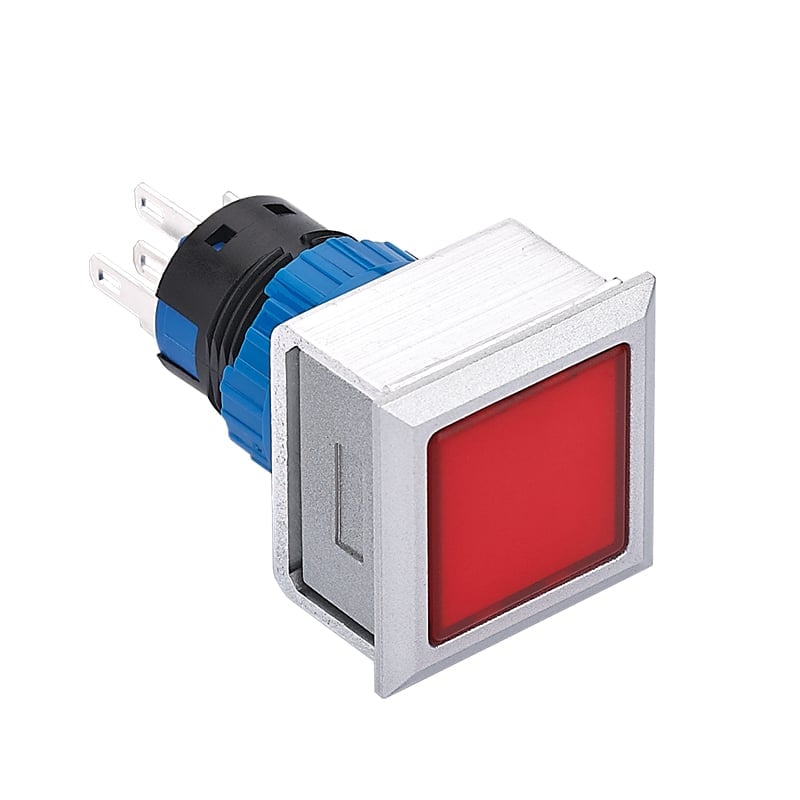
Use the LAS1GQ-11E/L/S product page as a product reference and obtain the complete ordered designation from the quotation. A verified laboratory report for another operator cannot automatically be applied to this product because the two photographs look similar.
Request the current supplier drawing and compare it with the sample designation in the report. If a family relationship is claimed, retain the documented explanation. The drawing revision guide provides a practical way to keep tested and proposed configurations visible together.
Use the lot traceability guide to connect approved records with later deliveries. Laboratory verification establishes a source of evidence. Receiving and change control help keep that evidence connected to the goods that eventually arrive.
Manage incomplete verification constructively
An unavailable directory page is an access limitation, not proof that the laboratory is unaccredited. Record the problem and try another official route, such as the accreditation body’s contact or a published scope file. Equally, a supplier’s assurance should not be presented as an independently completed directory check.
Where a scope entry is ambiguous, state what remains unresolved. For example, identify the method designation or site relationship needing clarification. This gives the laboratory a focused question and makes the pending decision easier to assign than a general note saying certification problem.
Continue independent purchasing work while the technical review remains open. Quotations, dimensional comparisons and sample arrangements may proceed under the project’s controls. Keep production release separate so that commercial progress does not silently become technical acceptance.
Ask for an evidence package that reviewers can use
For a first component discussion, the metal push button overview provides general context. Follow it with a focused request to ONPOW: full designation, intended equipment, applicable requirement and the particular evidence being sought. Ask for report identifiers and the issuing laboratory where relevant documents exist.
Avoid asking for an ILAC certificate for the button. The roles of accreditation bodies, laboratories and product certification organisations are different. Use the actual document type requested by the project so that the supplier can answer accurately or identify what is unavailable.
Agree who will make the acceptance decision and when it is needed. Save the supplied documents, directory evidence, clarifications and final reviewer disposition in the same controlled package. A reader should be able to follow the decision without reconstructing a long chain of messages.
Preserve an honest closeout record
At closeout, state which issuer and activity were checked, what product relationship was reviewed and which project requirement was considered. Avoid a general claim that the product is globally certified. Acceptance can depend on the market, customer and scheme; the review should preserve those boundaries.
For repeat orders, retain the accepted baseline and the notification route for relevant changes. If a later report comes from another laboratory or site, compare it with the new requirement rather than automatically copying the previous approval. The same workflow can be repeated without assuming that all documents are equivalent.
Consider a report issued by a group’s regional office while the scope names a separate testing site. Record the two identities and request their relationship. Resolving that relationship does not require accusing anyone of an error; it requires a traceable explanation. A clear clarification can close a real document gap while preserving confidence in a legitimate supplier relationship.
Frequently asked questions
Does ISO certification prove laboratory accreditation?
Do not treat different document types as interchangeable. Verify the claimed laboratory activity through the relevant accreditation record and scope.
Does ILAC test or certify the button?
No. ILAC’s FAQs distinguish its role from the work performed by laboratories. Request the actual issuer and document type.
Can a genuine report still be unsuitable for my order?
Yes. It may concern another specimen, revision or requirement. Verify product applicability separately from the laboratory’s claimed scope.
What if the directory is temporarily unavailable?
Record the limitation and seek another official verification route. Keep the result pending until the necessary evidence is obtained and reviewed.
Further learning
ILAC introduces accreditation and its role in confidence in laboratory services. Use this background alongside the specific scope checks in this article; the film does not accredit or endorse ONPOW.