

A 信号塔ライトとパネルインジケーター 判断は、機械の状態を読む必要がある場所から始まります。パネルインジケーターはキャビネットの前に立つオペレーターに最適です。タワーライトは、信号をパネルの上に高く上げるため、通路、隣接する作業ステーション、またはサービス位置から見やすくなります。どちらの装置も自動的に安全または情報豊富になるわけではありません:PLCの状態、選択された色、ラベル、アラームロジック、取り付け位置、地域の標準が、オペレーターが何を結論付けるかを決定します。多くの機械は、コントロールにローカルランプを使用し、共有状態のためにタワーを備えた両方を使用しています。このガイドは、視距離、情報、設置、制御出力の観点から両フォーマットを比較し、機械メーカーがパネルレイアウトを最終決定する前に信号を選択できるようにします。.
簡単な答え:信号を見る必要がある人に合わせて選ぶ
選ぶ パネルインジケーター コントロールやサービスを行う人に向けたメッセージの場合は、パネルインジケーターを選びます。選ぶ 信号塔ライト 人々がキャビネットの前に立たずに機械レベルの状態に気付く必要がある場合は、信号塔ライトを選びます。オペレーターがローカルの合図を必要とし、作業セル内の他の人々も共有状態を知る必要がある場合は、両方を使用します。まず意味を決めてから、装置と配線を選びます。色の多いセグメントが多いからといってタワーを選ぶのではなく、実際の視線を確認せずにパネルランプが小さすぎると決めつけないでください。.
| 要件 | パネルインジケーター | 信号塔ライト | 何を検証すべきか |
|---|---|---|---|
| オペレーターは制御ステーションで状態を読む | 通常は近くのローカルな合図 | 見えることもあるが、単一のローカルポイントには過剰な場合がある | パネルの位置、視角、レンズの色、機械のレジェンド |
| 人は通路や近くのステーションから機械の状態を見る必要がある | キャビネット、ドア、またはオペレーターによって隠されることがある | しばしば装置の上に取り付けられていると気づきやすい | 障害物、視点、周囲の光、そして音声アラーム |
| いくつかの機械状態には異なる出力が必要 | 別々のランプはパネルスペースを多く使う場合がある | 複数のセグメントは関連する機械状態をグループ化できる | 状態の数、PLC出力、共通配線、モデル図 |
| メッセージは安全に関する警告である | ランプはインターフェースの一部である場合がある | タワーは視認性を向上させることができるが、機能の安全性を保証するものではない | リスク評価、適用される基準、アラームの動作、検証済みの安全システム |
各装置が伝える内容
パネルインジケーターは制御パネルの表面を通して取り付けられる単一の状態点である。例えば、供給が存在する、プロセスが準備完了している、または特定の出力がアクティブであることを示すことができる。その強みは近接性にあり、オペレーターはランプを近くのラベル、スイッチ、メーター、または制御機能と関連付けることができる。コンパクトなインジケーターは、複数のローカル条件に別々のラベルが必要な密集したオペレーターパネルにも収まる。.
信号タワーライト、またはスタックライトや多段警告灯とも呼ばれるもので、突き出た本体に可視セグメントをグループ化している。その目的は、複数の位置から特定の機械状態を見つけやすくすることである。正確な製品によっては、いくつかの点灯層や音声要素を持つ場合もある。タワーは、少数の合意された機械レベルの状態を伝えるものであり、詳細なHMIメッセージやアラーム履歴の代わりにはならない。.
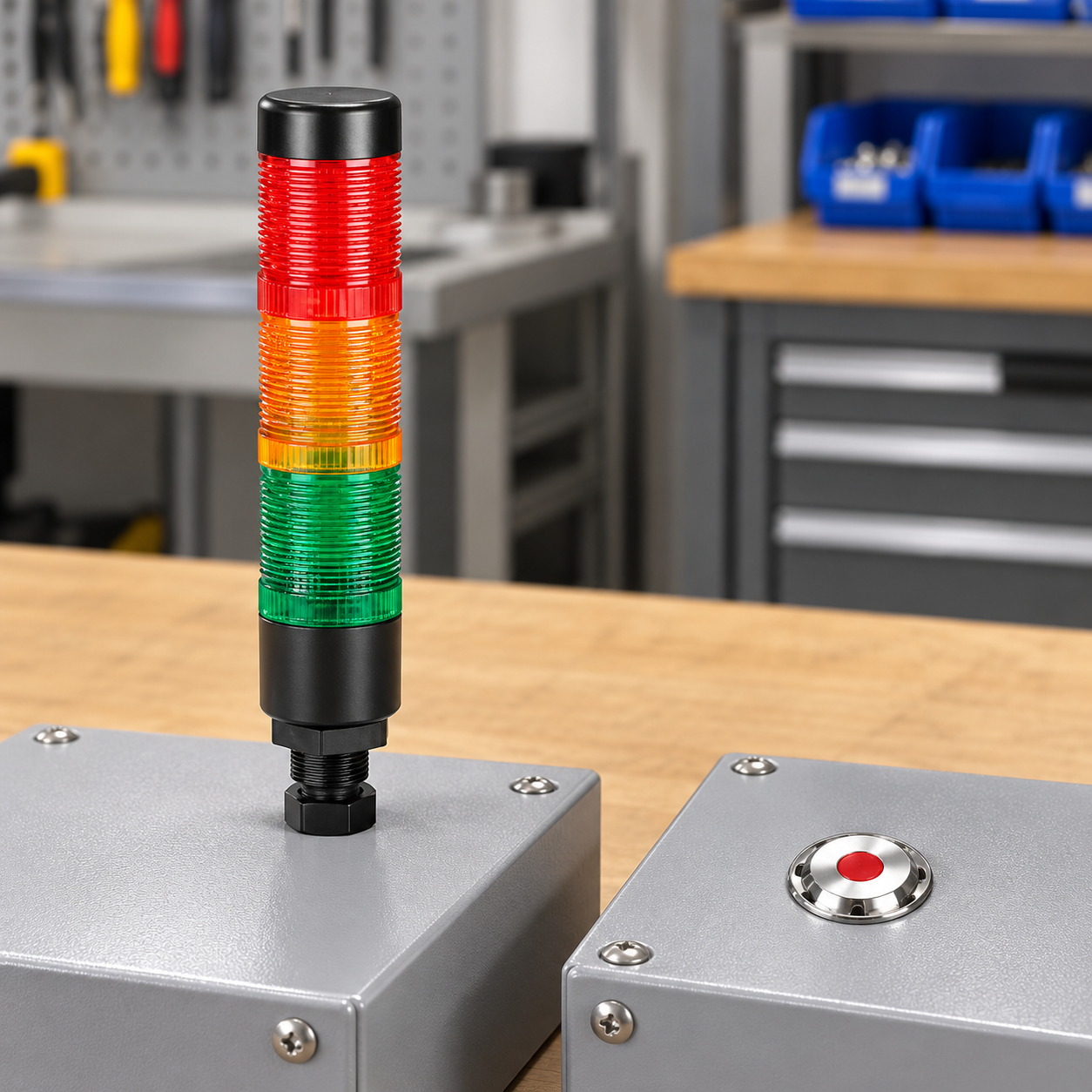
区別は、状態表示の対象となる観客と場所に関するものであり、単にレンズのサイズだけではない。ONPOWは次のようにリストしている GQ12F-D/N 金属信号ランプ フラットラウンドヘッドを備えた12mmパネルデバイスとして。 HBJD-40A/D/3/RYG/A 多段警告灯 これは別個のタワースタイルの製品です。製品ファミリー名や写真から推測するのではなく、機械の正確なバリアント、セグメント配置、供給、配線図を確認してください。.
カタログ写真ではなく、視点位置から始める
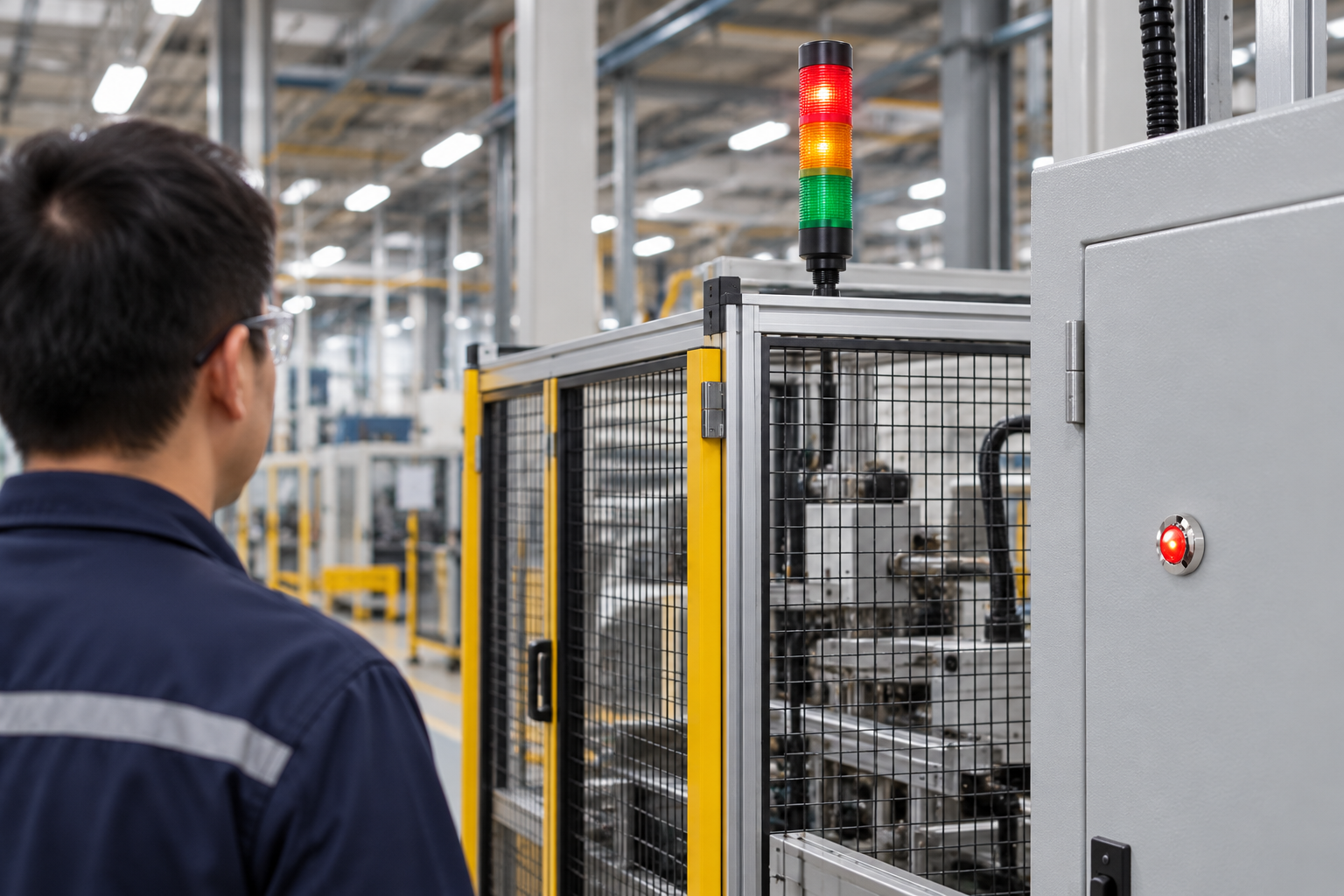
実用テストは、意図した人物が決定を下す場所で信号を識別できるかどうかです。レイアウトに正常な操作員の位置、保守位置、通路、近くの作業場をマークします。その後、キャビネットの扉を閉じた状態や通常のガード、器具、カート、機械部品が作業位置にある状態で何が見えるかを確認します。製品画像では明らかに見えるランプでも、設置された機械内では隠れている場合があります。.
パネルインジケーターの場合、ラベルとランプが一緒に見えるかどうかを確認してください。制御の横に小さなレンズを置くと、アームの長さからは非常に見やすくなりますが、セルの向こう側から読むのは難しい場合があります。通常の作業中に手や開いたキャビネット扉、ケーブル束によって隠される場所にランプを設置しないようにしてください。.
タワーの場合、必要なすべての視点から高さと角度を評価してください。高く上がったライトは、天井構造、保管された材料、または他の機械によって遮られることがあります。明るさ、レンズの色、点滅モード、周囲の反射は視認性に影響するため、実際に使用される条件下での設置状況を評価してください。特定のモデルに対してメーカーが公開した固定の視距離を主張しないでください。.
何段階の状態を表示する必要がありますか?
一つのローカル条件には一つのパネルインジケーターだけで十分な場合があります。複数の異なる機械状態をグループ化する方が簡単な場合もあり、特に状態を操作員ステーション外からも見える必要がある場合です。セグメントの数だけで選択を決めてはいけません。最初に、運転中、待機中、注意必要、故障など、認識が必要な状態をリストアップします。それぞれの状態を定義されたコントローラー出力と可視表示にマッピングします。.
隣接する機械で同じ色やパターンが異なる意味を持つ場合、作業者はタワーを誤読する可能性があります。可能な限り機器エリア内で色を一貫させ、例外を記録し、色だけでは曖昧な場合はラベルやHMIメッセージを使用してください。タワーの色は、すべての機械や管轄区域で一つの普遍的な意味を持つわけではありません。IEC 61310-1は、機械インターフェースにおける安全関連情報のための視覚、聴覚、触覚信号について規定しています。IEC 60073は、インジケーターやアクチュエーターの一般的な符号化原則を記述しています。実際のプロジェクトでは、該当する版と採用された要件を確認してください。.
ローカルの慣習について詳しくは、ONPOWのガイドを参照してください。 タワーライトの色の意味 そして 表示灯の選定. A separate パネルインジケーターの明るさガイド discusses visibility checks for the installed viewing conditions.
制御出力と配線は選択の一部です
A tower does not create machine intelligence. It displays signals assigned by the control system. Before selecting a model, count the required states and check whether the intended PLC or relay outputs can control them. Confirm the tower’s common wiring, rated voltage, segment arrangement, and any buzzer option from the exact model diagram. A simple tower and a programmable light are not automatically interchangeable.
A panel indicator is often a simpler point-to-point status output, but it still requires the correct lamp supply, current, terminal style, and panel cutout. Keep the control circuit and the load circuit distinct when the design requires it. If a status output is derived from an auxiliary relay contact, document the logic so the lamp reflects the intended machine condition rather than only a coil command.
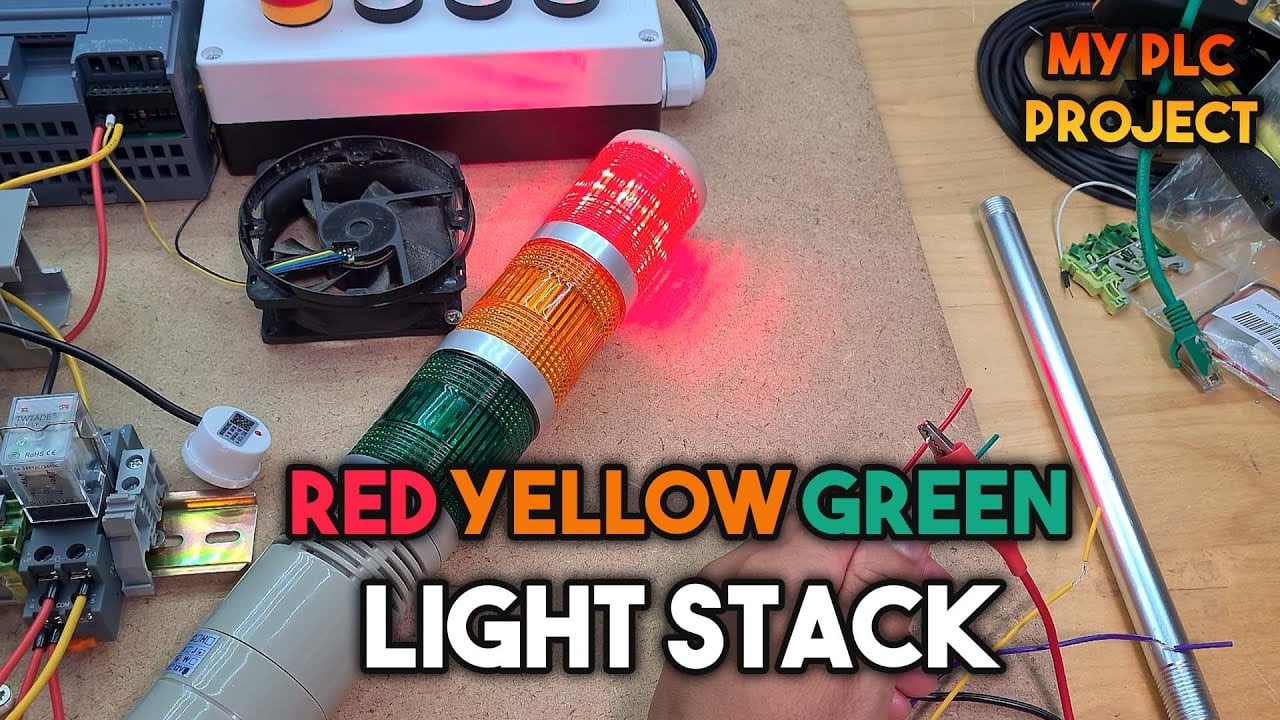
The short video below demonstrates one PLC light-stack logic example. It is a programming illustration, not a product wiring diagram or a standard that defines what every color must mean.
Open the PLC light-stack example on YouTube
両方のフォーマットが一つの機械に必要な場合
Using a tower and a panel indicator together can be sensible when they answer different questions. The tower can show a shared, high-level machine condition to people in the work area. A panel lamp can show a local control state or identify which panel function is active. The two signals must agree with the defined logic; otherwise, the extra indicator can add confusion instead of clarity.
Do not map every HMI alarm to a separate tower segment without reviewing the operator workflow. A compact tower can be helpful for a few important states, while a large list of diagnostic conditions belongs in the HMI or machine documentation. If audible signalling is added, define when it sounds, who must respond, and how it is silenced or acknowledged. Avoid constant alarms that train people to ignore the device.
図面承認前の選択チェックリスト
- Name each machine state and the person who needs to see it.
- Mark the viewing positions and likely obstructions on the equipment layout.
- Choose a local panel indicator, a raised tower, or both based on those positions.
- Define colors, labels, flash behavior, and buzzer conditions in the machine documentation.
- Match the exact voltage, output/common arrangement, segment count, mounting method, and panel cutout to the selected product drawing.
- Check the installed signal from all required viewing positions under normal ambient lighting.
- Verify the controller output and the visible indication during commissioning.
- Record the approved model and intended meaning so a future replacement does not silently change the signal.
For installation placement and operator sight lines, see tower-light placement around industrial machines. If the application needs a local lamp beside a command control, compare a signal lamp with an 照光式押しボタン; they indicate and command different things.
選択に関するよくある間違い
Choosing by color count alone. More tiers do not help if the machine only needs one clear state or if workers cannot identify the intended mapping. Define the messages first.
Assuming a tower replaces the operator panel. A tower can show broad machine status, but it usually cannot explain the cause of a fault. Keep detailed diagnostics in the HMI, alarm list, or service documentation.
Assuming one color code is universal. Color conventions depend on the applicable standards and the project’s documented operating logic. Confirm the code before commissioning, especially where machines or facilities use different conventions.
Checking visibility from one position only. Test from the people’s actual positions, with guards and neighboring equipment in place. A signal hidden from one required station may fail its purpose even if it is obvious from the front of the cabinet.
Treating panel protection as installation approval. An indicator or tower’s product rating does not certify the complete enclosure, mounting hole, wiring, or surrounding environment. Verify the assembled machine design and conditions.
よくある質問
Is a signal tower light better than a panel indicator?
必ずしもどちらかが優れているとは限りません。制御盤から離れた場所でも機械の状態を確認する必要がある場合は、タワーライトが適しています。操作員が操作部の近くで状態を確認する必要がある場合は、パネル表示灯が適しています。確認する位置と伝えたい情報に応じて、適切な形式を選択してください。.
1台の機械にタワーライトとパネルインジケーターの両方を使用できますか?
はい、両方のフォーマットが明確で互換性のある情報を表示する場合に限ります。タワーは共有された機械の状態を示すことができ、パネルランプは局所的な機能を識別します。両方のマッピングを記録し、立ち上げ時に検証してください。.
タワーライトの色には、世界共通の意味があるのでしょうか?
必ずしもそうとは限りません。適用されるプロジェクト規格や施設内の慣例を確認したうえで、機械の色分けルールを文書化してください。規格では信号の符号化方法が定められていますが、読み手が色だけを見て特定の機械の状態を推測することがないようにしてください。.
機械は何段の塔セグメントを使用すべきですか?
必要な個別の有用な状態と、対応する制御出力に応じた段数を使用してください。より多段のオプションが存在するという理由だけで、段数を増やさないでください。選択したモデルの正確なセグメント構成と配線図を必ず確認してください。.
Does a signal tower replace the HMI alarm screen?
通常はそうではありません。塔は少数の広範な条件を見つけやすくします。HMIは、コンテキスト、アラームのテキスト、履歴、トラブルシューティングの詳細を提供でき、色付きのセグメントでは伝えられない情報を伝えることができます。.



